lunes, 20 de enero de 2014

EL CONOCIMIENTO HUMANO. KNOWLEDGE, EVIDENCE, BELIEF AND OPINION

3.1 El conocimiento humano. Knowledge, evidence, belief and opinion

                                                                                  "Nuestro conocimiento es una relación                    imperfecta entre las cosas exteriores y nuestro yo" (El árbol de la ciencia Pío Baroja)


1. Ejercicio.
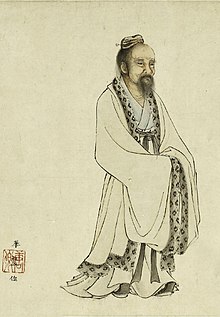
 Zhuangzi es una recopilación de textos atribuidos al pensador del mismo nombre que vivió entre el s. IV y III a. n. e.

Lee el siguiente texto y trata de explicar la paradoja que presenta.

      Zuangzi y Huizi estaban paseando por el dique en el río Hao. Zuangzi exclamó: "¿Mirad cómo brincan y disfrutan esos peces plateados! ¡He aquí el verdadero deleite de los peces!"

     Huizi: "Pero no sois un pez, ¿cómo sabéis cuál es el deleite de los peces?"

     Zuangzi: "No sois yo, ¿cómo sabéis que no sé cuál es el deleite de los peces?"

     Huizi: "No soy vos y, ciertamente, no sé lo que lleváis dentro. Pero está claro que no sois un pez, por tanto no sabéis cuál es el deleite de los peces".

     Zuangzi: "Volvamos al punto de partida, si no tenéis inconveniente. Me habéis preguntado cómo sé cuál es el placer de los peces. Por tanto, si me habéis preguntado esta pregunta, es que sabíais  que yo lo sabía. Pues bien, lo sé estando aquí, a la orilla del río".

                                              (Zuangzi 17)


      Para hablar sobre el conocimiento humano tendríamos que tener en cuenta las aportaciones de numerosas ciencias: psicología, neurología, biología....Más aún, es mucho más lo que ignoramos al respecto que lo que sabemos. Ciñéndonos al un punto de vista filosófico, hay que decir que la rama que lo estudia es la epistemología o teoría del conocimiento.
   Aunque siempre ha preocupado saber de dónde proceden nuestras ideas y cómo estar seguros de que estas reflejen la realidad tal cual es, este campo adquiere especial protagonismo entre los siglos XVII y XVIII. Entre otras razones, hay que tener en cuenta que durante estos siglos estamos en plena revolución científica y que las ciencias están cosechando notables éxitos mientras que la filosofía parece, como decía Kant, eternamente  estancada en  un campo de batalla donde tan pronto se alza victoriosa una corriente, llega otra y se le enfrenta. Era, por tanto, necesario analizar el conocimiento humano y ver sus límites y es aquí donde la epistomología cobra un papel fundamental.
    Muchas de las propuestas que entonces se hicieron parecen quedar anticuadas, otras han servido de guía para futuras investigaciones. Pero antes de entrar en el terreno filosófico de si es o no posible un conocimiento cierto de las cosas y cuál, si lo hay, es el límite del conocimiento, podemos comenzar por caracterizar el conocimiento humnao.
    Uno de sus princiàles rasgos es que nuestro pensamiento es, sobre todo, simbólico y, en concreto, lingüístico. Gracias al lenguaje podemos escapar de lo inmediato y pensar en cosas que no están en ese momento al alcance de nuestros sentidos. Por ejemplo, podemos estar en clase ocupados en pensar cómo pasaremos unas vacaciones en la playa. Incluso podemos ocuparnos de asuntos verdaderamente importantes que no sólamente hoy, nunca, podrán ser percibidos por los sentidos: el significado de la justicia, de la solidaridad.
   Sólo porque hay lenguaje podemos entender estas y muchas más cosas y, no sólo eso: el hombre puede transmitir y almacenar lo que aprende evitándose tener que estar inventando siempre lo mismo.
Por ello, empobrecer el lenguaje es, en definitiva, empobrecer nuestro pensamiento, nuestra capacidad de comunicación, de transmitir intereses y de avanzar como queda reflejado en este ejercicio de clase.
   Los alumnos de Primero de Bachillerato de Ciencias (2013/4) del IES La Rosaleda, van a intentar transmitir a sus compañeros una serie de ideas.
   En primer lugar tenemos a Laura Quintero Ocaña a ver qué ocurre:


   y...¡Sí! Tenía que decir que estaba embarazada (¡Tranquilos! No lo está)

   Lourdes Vegas Fernández también transmitió un mensaje. Éste mucho más fácil
¡¡Tengo hambre!!

 Parece que la cosa va bien. Sigamos probando con David Stachovskij del mismo curo.


   En fin. ¡Tiene sueño! Normal. Después de todo, esto es una clase de filosofía.

   Como todo esto está resultando demasiado fácil, vamos a ver si Inma Alba Chicón sabe transmitir  algo más complejo:

   Bueno, hemos tenido algunos problemillas para saber si le gusta o ama el fútbol. Si es ella o algún otro; pero, en líneas generales, el mensaje ha sido transmitido.
   Pasrece que no hay límites a nuestra capacidad de comunicación, así que ya sólo nos queda un par de intentos. El primero con Borja García Higueruelo, delegado del curso:

   NO HA HABIDO MANERA. ¡Tampoco era tan difícil! Sólo había que decir: Es importante cuidar bien de los hijos
   Finalmente lo intenta Gabriel Fira Radu con no mucha mejor suerte.

 El mensaje era el siguiente: El estado moderno debe constreuirse sobre bases solidarias.
   Cualquiera podría decir que íbamos a mala idea. Nada más lejos de mi intención. Sin embargo, en el ejercicio se evidencia que a medida que los mensajes se hacen más complejos, el éxito de la comunicación disminuye. Mis alumnos no conocen la lengua de signos que, en definitiva, es otro lenguaje, de manera que se ven obligados a improvisar con gestos. Éstos no tienen en su mayoría una dimensión simbólica, no son capaces de sustituir ideas. Por eso, mientras el gesto se parece a lo designado, la comunicación marchaba. Vale, no podíamos hacer precisiones muy sutiles; pero, en líneas generales, nos hacíamos entender. Sin embargo; cuando ya no hay esa semejanza física la comunicación fracasa.. ¿Qué ocurriría entonces si careciésemos de lenguaje o simplemente lo redujésemos drásticamente? ¿Cuántas cosas nos dejaríamos de decir? ¿qué saber podríamos compartir o almacenar? o, más aún, ¿Cuántas cosas dejaríamos de pensar? ¿Sería nuestra vida distinta a como la conocemos? ¿Habría sobrevivido nuestra especie?
   Es cierto que el lenguaje mismo presenta también deficiencias. A veces no significa lo que queremos y da lugar a malentendidos. No obstante, también entonces su importancia se nos revela de manera clara. Nos desespera que no signifique lo que queremos transmitir y nos frustran sus límites.
Pero la lengua refleja también nuestra alma. No sólo ocurre que con un lenguaje pobre se reduzca nuestra capacidad de análisis, la facultad de captar las diferencias, lo sutil. Ortega ve en la lengua un reflejo de nuestro ser, de manera que un yo profundo, una época de hombres intelectualmente activos y responsables, tendrá una lengua más rica; mientras que una época de estupidez y  de masas se refleja en una lengua más pobre.
   Veamos cómo lo analiza Ortega y Gasset en el Prólogo para franceses de su obra La rebelión de las masas:
   "La lengua revela la condición más arcana de la sociedad que la habla. En la porción no helenizada del pueblo romano, la lengua vigente es la que se ha llamado "latín vulgar", matriz de nuestros romances. No se conoce bien este latín vulgar y, en buena parte, sólo se llega a él por reconstrucciones. Pero lo que se conoce basta y sobra para que nos produzca espanto dos de sus caracteres. Uno es la increíble simplificación de su mecanismo gramatical en comparación con el latín clásico. La sabrosa complejidad indo-europea, que conservaba el lenguaje de las clases superiores, quedó suplantada por un habla plebeya, de mecanismo muy fácil, pero a la vez, o por lo mismo, pesadamente mecánico, como material; graqmática balbuciente y perifrástica, de ensayo y rodeo como la infantil.Es, en efecto, una lengua pueril o gaga que mo permite la fina arista del razonamiento ni líricos tornasoles. Es una lengua sin luz ni temperatura, sin evidencia y sin calor de alma, una lengua triste que avanza a tientas. Los vocablos parecen viejas monedas de cobre, mugrientas y sin rotundidad, como hartas de rodar por las tabernas mediterráneas. ¡qué vidas evacuadas de sí mismas, desoladas, condenadas a eterna cotidianidad se adivinan tras este seco artefacto lingüístico!"

        Eva Meijer, es una joven filósofa nacida en 1980 en los Países Bajos. Sus investigaciones se centran principalmente en justicia social y en el lenguaje. El libro Los animales habladores, examina el lenguaje animal, lo que sabemos acerca de él y lo que debemos saber para establecer relaciones más justas con ellos y con nosotras mismas.


Ejercicio:

Lee el siguiente texto y responde a las cuestiones planteadas.

    "Para entender lo que es el lenguaje, hemos de estudiar su funcionamiento, lo que podemos hacer analizando  las prácticas en las que se usa.  Wittgenstein establece una comparación con la palabra "juego". Existen muchos juegos diferentes, que no comparten ninguna característica común que nos permita definirlos. Algunos juegos poseen ciertos rasgos comunes, mientras que los de otros son distintos. No obstante, cuando jugamos sabemos que se trata de un juego. El concepto de "lenguaje" consiste asimismo en las numerosas formas en las que se emplea el lenguaje, pero no todas ellas poseen una característica común que podamos usar para definirlo. Por consiguiente, cuando Wittgenstein habla de los "juegos del lenguaje", no quiere decir que el lenguaje sea como un juego ni que las personas siempre estén jugando cuando lo emplean, sino que la estructura del concepto "lenguaje" es comparable con la del concepto "juego"".
                                    (Eva Meijer, Animales habladores)
1. Señala cinco usos o situaciones en las que el lenguaje sea fundamental. 
2. ¿Por que, según Wittgenstein no podemos dar una definición de lenguaje? Trata de ilustras tu respuesta con un ejemplo.


Epistemology, or the Theory of Knowledge

Philosophers have always wanted to know how we can obtain knowledge, and how we can be sure that the things that we think reflect reality. Which is more important – what we think, or what we experience? Or maybe the senses are our enemies, and they lie to us? Which characteristics must knowledge have in order to be certain?

However, it was only between the 16th and 18th century that epistemology became one of the most important areas of philosophy. What happened then?

During this period, science developed so much that we talk about the first scientific revolution. We can mention people like Galileo, Kepler, Newton, or Harvey, and so on. We saw a great change in this time because after the triumph of Christianity in Europe, the use of senses and attention to this world was totally abandoned in favour of the Bible’s explanation. The Bible contained the “truth”, and every rational explanation had to agree with the Bible. New scientists had no motivation to do new experiments when they could find all of the answers in the Bible, so they normally only did small variations on classic experiments that did not contradict the holy book.

From the 16th century on, a new mentality and a new generation of scientists appeared, who wanted to experiment and to measure the world around them, and of course that caused very good results. For example, Galileo is the inventor of the telescope, and with this new instrument he could get more evidence for his heliocentric theory. We can also talk about Harvey. He discovered the pulmonary circulation of blood by performing vivisections on animals. In a period when looking at the human body was almost forbidden, he wanted to look and to see for himself how blood is made and what happens with our blood inside of our bodies. The explanation that medicine gave in this period came from Galeno in the 1st century. He said that blood was made by our kidneys and that we are always making new blood. The problem that had no solution at that time was what happened to the old blood and why we didn’t explode. So Harvey had an idea: maybe we always have the same blood moving around our body, and the lungs are the motor that keeps the blood marching.

But how could he prove this? Well, he took living animals and cut them open while they were still alive. Yes, this sounds very traumatic, but this was the only way to see what was happening inside of us – we had no scanners, no radiography, nothing like that. Harvey represents the new way of making science quite well, in which it‘s necessary to see the facts, to measure lengths, to weigh weights, and so on. Now we are used to this way of working, but it was totally revolutionary at the time, and of course it caused a lot of success.

But what was happening with philosophy? No success at all. Philosophers continued arguing without any definite conclusion. So it was very easy to ask the following question: are we maybe working badly, are we not using our reason like we should, or are we maybe asking questions that we are not able to answer? Perhaps if we had a method like science, we could also get good results. That’s the problem – we need a method. And that was the main work of Descartes. From that moment, epistemology became one of the most important areas of philosophy for the next two centuries. Before I can say I know this or that or I can describe the world or so on, I have to discover the limits of human reason, and the best way to employ it.


When we talk about epistemology, or the theory of knowledge, we are talking about what we need to get true knowledge. But what are we talking about? In philosophy, we make a distinction between knowledge, opinion, belief, and evidence.
Normally, we use the word ‘knowledge’to refer to something that we believe and that we can demonstrate to be true. It’s a kind of correspondence between our idea and reality. For example, I think my mother is blonde, but we can also see the colour of her hair, and if it is so then we can say that it is true.
On the other hand, we use ‘belief’ to refer to an idea that we really think is true but we cannot demonstrate. For example, I believe in God. I am totally sure that God exists, but I can’t prove it.
And an ‘opinion’ is an idea that I’m not sure of and I can’t demonstrate to be true. For example, in my opinion, I think it’s going to rain tomorrow – that’s an idea I have. I’m not a scientist and I haven’t studied meteorology but I’ve seen the clouds and that’s what I think. Or another example, I think it’s going to be a lovely summer – I have reasons to think that, but I cannot prove anything or know the future. It’s just what I think.
Finally, we have ‘evidence’ that describes a feeling of total security about an idea, something that cannot be doubted. For example, if we say something like “I’m a philosophy teacher” or “you are sitting in this classroom”. However, it describes a subjectivefeeling and it could be that this feeling doesn’t correspond with reality and we are wrong. Normally, we don’t doubt the things that are presented as evident, but how could I be sure that I’m not dreaming? Especially when sometimes we have dreams so realistic that we believe they’re true. Yes, of course, there are many reasons to believe that we’re not dreaming, but the question is: can I prove it?
And another similar question, how can I be sure that my mind works correctly? If I were schizophrenic or paranoid, I would hear or see things as clearly as I am hearing and seeing you right now, but they would not be true or real. Of course, we could answer that if everybody sees the same thing or thinks the same thought, then that’s proof that what I’m seeing or thinking is true. But the fact is that it isn’t necessarily so. In the Middle Ages, everybody believed that the world was flat, but it wasn’t. So even if everybody thinks the same, everybody can be wrong. How can we be sure that we are not all paranoid or schizophrenic? We realise we are doing something strange because most people don’t do the same, but if we were all paranoid, we would all have the same behaviours and thoughts, and we wouldn’t be able to realise how crazy we were.
So, although normally we assume that anything that is evident is also true, we must remember that when we talk about evidence we are really only saying that we are very sure of it, and we can still make mistakes. For example, do you remember some mistakes you have made in exams? You were sure of the answer, you could swear you were right, but ultimately, you weren’t.

 
                                                GO TO THE CINEMA!!!!!
It will be interesting to watch A beautiful Mind
Here it is a  synopsis of the film
John Nash arrives at Princeton University as a new graduate student. He is a recipient of the prestigious Carnegie Prize for mathematics. Though he was promised a single room, his roommate Charles, a literature student, greets him as he moves in and soon becomes his best friend. Nash also meets a group of other promising math and science graduate students, Martin Hansen, Sol, Ainsley, and Bender, with whom he strikes up an awkward friendship. Nash admits to Charles that he is better with numbers than people, which comes as no surprise to them after watching his largely unsuccessful attempts at conversation with the women at the local bar.

Nash is seeking a truly original idea for his thesis paper, and he is under increasing pressure to develop his thesis so he can begin work. A particularly harsh rejection from a woman at the bar is what ultimately inspires his fruitful work in the concept of governing dynamics, a theory in mathematical economics.

After the conclusion of Nashs studies as a student at Princeton, he accepts a prestigious appointment at the Massachusetts Institute of Technology (MIT), along with his friends Sol and Bender. Russell Crowe as John Nash. Russell Crowe as John Nash.

Five years later while teaching a class on Calculus at MIT, he places a particularly interesting problem on the chalkboard that he dares his students to solve. When his student Alicia Larde comes to his office to discuss the problem, the two fall in love and eventually marry.

On a return visit to Princeton, Nash runs into his former roommate Charles and meets Charles young niece Marcee, whom he adores. He also encounters a mysterious Department of Defense agent, William Parcher. Nash is invited to a secret United States Department of Defense facility in the Pentagon to crack a complex encryption of an enemy telecommunication. Nash is able to decipher the code mentally to the astonishment of other codebreakers.

Parcher observes Nashs performance from above, while partially concealed behind a screen. Parcher gives Nash a new assignment to look for patterns in magazines and newspapers, ostensibly to thwart a Soviet plot. He must write a report of his findings and place them in a specified mailbox. After being chased by the Russians and an exchange of gunfire, Nash becomes increasingly paranoid and begins to behave erratically.

After observing this erratic behavior, Alicia informs a psychiatric hospital. Later, while delivering a guest lecture at Harvard University, Nash realizes that he is being watched by a hostile group of people. Although he attempts to flee, he is forcibly sedated and sent to a psychiatric facility. Nash's internment seemingly confirms his belief that the Soviets were trying to extract information from him. He views the officials of the psychiatric facility as Soviet kidnappers.

Alicia, desperate to help her husband, visits the mailbox and retrieves the never-opened "top secret" documents that Nash had delivered there. When confronted with this evidence, Nash is finally convinced that he has been hallucinating. The Department of Defense agent William Parcher and Nash's secret assignment to decode Soviet messages was in fact all a delusion. Even more surprisingly, Nash's friend Charles and his niece Marcee are also only products of Nash's mind.

After a painful series of insulin shock therapy sessions, Nash is released on the condition that he agrees to take antipsychotic medication. However, the drugs create negative side-effects that affect his relationship with his wife and, most dramatically, his intellectual capacity. Frustrated, Nash secretly stops taking his medication and hoards his pills, triggering a relapse of his psychosis.

While bathing his infant son, Nash becomes distracted and wanders off. Alicia is hanging laundry in the backyard and observes that the back gate is open. She discovers that Nash has turned an abandoned shed in a nearby grove of trees into an office for his work for Parcher. Upon realizing what has happened, Alicia runs into the house to confront Nash and barely saves their child from drowning in the bathtub. When she confronts him, Nash claims that his friend Charles was watching their son. Alicia runs to the phone to call the psychiatric hospital for emergency assistance. Parcher urges Nash to kill his wife, but Nash angrily refuses to do such a thing. After arguing with Parcher, Nash accidentally knocks Alicia to the ground. Afterwards, Alicia flees the house in fear with their child, but Nash steps in front of her car to prevent her from leaving. After a moment, Nash realizes that Marcee is a figment of his hallucinations because she has remained the same age since the day he met her. He tells Alicia, "She never gets old." Only then does he accept that all three people are, in fact, part of his hallucinations. (It is important to note that in real life, Nash suffered from auditory hallucinations and possible delusions, instead of visual hallucinations).

Caught between the intellectual paralysis of the antipsychotic drugs and his delusions, Nash and Alicia decide to try to live with his abnormal condition. Nash consciously says goodbye to the three of them forever in his attempts to ignore his hallucinations and not feed his demons. However, he thanks Charles for being his best friend over the years, and says a tearful goodbye to Marcee, stroking her hair and calling her "baby girl", telling them both he wouldn't speak to them anymore.

Nash grows older and approaches his old friend and intellectual rival Martin Hansen, now head of the Princeton mathematics department, who grants him permission to work out of the library and audit classes, though the university will not provide him with his own office. Though Nash still suffers from hallucinations and mentions taking newer medications, he is ultimately able to live with and largely ignore his psychotic episodes. He takes his situation in stride and humorously checks to ensure that any new acquaintances are in fact real people, not hallucinations.

Nash eventually earns the privilege of teaching again. He is honored by his fellow professors for his achievement in mathematics, and goes on to win the Nobel Memorial Prize in Economics for his revolutionary work on game theory. Nash and Alicia are about to leave the auditorium in Stockholm, when John sees Charles, Marcee and Parcher standing and smiling. Alicia asks John, "What's wrong?" John replies, "Nothing." With that, they both leave the auditorium.


  Now it’s your turn. 
1. Write an example of an opinion, an example of a belief, an example of knowledge, and an example of evidence.
2. Answer this quiz about the flim:

QUIZ: A Beautiful Mind 
Circle the correct answer.
1. Game theory is a distinct and interdisciplinary approach to the study of human behavior.
The disciplines most involved in game theory are mathematics, economics and the other
social and behavioral sciences. Game theory, like computational theory, was founded by
the great mathematician John von Neumann. Since the work of John von Neumann,
"games" have been a scientific metaphor for a much wider range of human interactions in
which the outcomes depend on the interactive strategies of two or more persons, who
have opposed or at best mixed motives. The work of John Nash was about:
Games in which one player tries to beat the computer.
Games in which two people fight each other.
Games in which three or more people fight for global resources, with possible
cooperation between players. 
2.  John Nash, while in Princeton, is lured to play a math game by some of his friends-to-be.
He loses, much to his amazement, as he says: "I had the first move... my play was
perfect." According to Game Theory, in a complete knowledge game, he should've won,
or at least achieved a draw. He then concludes: "The game is flawed!" What is the name
of that math game?
Chess
Go
Sudoku
Tower of Hanoi 
3. John Nash has won the Nobel prize in:
. Economics
Game Theory
Math
Physics
Survival Math Skills 
4. John Nash says to his friends: “If we all go for the blonde and block each other, not a
single one of us is going to get her. So then we go for her friends, but they will all give us
the cold shoulder because no one likes to be second choice. But what if none of us goes
for the blonde? We won't get in each other's way and we won't insult the other girls. It's
the only way to win.” This example from the movie shows that
Blondes are hard to get.
When players cooperate and share resources they can achieve better results than
when they compete for the same thing.
The color of people’s hair is very important.
When it comes to blondes, your friends are your enemies

5. Why did John Nash develop schizophrenia?
He solved too many math problems.
He was genetically predisposed; one of his sons had it too.
He didn’t suffer from schizophrenia; those people and those voices were real. 
6. John Nash says to Alicia: “I've made the most important discovery of my life. It's only in
the mysterious equation of love that any logical reasons can be found. I'm only here
tonight because of you. You are the only reason I am... you are all my reasons.” Why is
John Nash mixing love and math?
He has schizophrenia.
A mathematician will use the vocabulary of math even for non-mathematical
activities. It is a metaphor.
He solved the equation and Alicia was the solution. 
7.   Why did the Army offer John Nash a job?
He wanted to kill Communists.
They didn’t know he would develop schizophrenia.
He was very good at math, especially at breaking codes.
He had connections. 


YOUR OPINION IS IMPORTANT 
Nacho del Arco Bonet, student of 1BS1 (2015/6) made this reflection about knowlege

I think that in order to know what is actually true, we must start with the lile things that we
are sure of and then keep connecng the dots unl we make a big conclusion. But how can we
be so sure of something? We’ve learnt that the senses can lie to us but without them, we
cannot perceive the world outside. So, I guess that we must believe in our senses and then
make sure that everyone sees the same way we do, because even though we all have di"erent
opinions we perceive reality, more or less, the same way. Or at least, I like to think so. To
support this reasoning, I would like to share a theory I’ve always had in mind. If we look at the
sea, we can all agree that it’s blue, with di"erent tonalies but blue. But what if the way I see
the sea is di"erent from yours? When we were young, we were taught the colours but we can
never know if we see them the same way. So, we made an agreement to name the colours one
way so we all could understand eachother and I think its the same with knowledge. We’ve
agreed to name things one way and called them knowledge to make things easier. If it wasn’t
that way, we would live in a world of disagreement which would be such a chaos. On the other
hand, the things most of the people think are right aren’t always applicable for everyone. For
example, we think killing people is wrong and its punished by the law, but killing animals in
order to eat isn’t. What is so di"erent? Even though we consider ourselves superior to them
because we’ve developed a language, we are not in the right to take their life away. They don’t belong to us

However, Elisa Sánchez, from the 1BC (2015/6), has a different opinion
How can we know when we think we are doing it right and it’s real?

In my opinion, we can’t answer this question with a method, or even answer it, because we can´t really know what we think is real. It all depends on the perspective; maybe I´m convinced that something is real, but someone can think completely different. So we can´t really prove it because, now, how do we know what person it’s right? The most common answer is: is thinking right the person who thinks like the others. But, how can we be so sure about that? Maybe everybody is wrong, like in the past when everybody thought the Earth was round. Maybe the person who thinks different is right.

To know if something is real we need to prove it,  if we prove it for a dog (an animal who perceive things completely different) what is real is completely different, so maybe what the human perceive is wrong. Maybe that´s the explication why sometimes the people with mental disorders aren’t aware that they’re ill, because their reality is distorted and the perceive the world in a different way, so they think different and are convinced what they see is real or right.


jueves, 31 de marzo de 2011

La religión griega

La religión griega

Uno de los rasgos más llamativos de la religión griega era su carácter politeísta. Cada uno de sus numerosos dioses representaba una potencia. Sin embargo, no eran considerados como los creadores del mundo. De hecho, para la mentalidad y la posterior filosofía griega el paso del no ser al ser era absolutamente inexplicable, de la nada, como nada es, no puede surgir algo. Por tanto si el mundo existe, es preciso que su materia o el principio que lo constituye haya existido desde siempre. Sólo muchos siglos después, con el cristianismo, se extenderá la idea de la creatio ex nihilo (creación desde la nada)
Veamos cómo lo ilustra Sara Muñoz Ramírez del 1BM, a partir de un estupendo vídeo.

Así pues, los dioses griegos, a pesar de su superioridad frente al hombre (eran inmortales, su poder era mayor e, incluso, dominaban su vidas), no eran omnipotentes, no habían creado el mundo y ellos también se encontraban de algún modo suejtos a su orden natural.
Formaban un conjunto de doce dioses que tenían su morada en el Olimpo y estaban presididos por Zeus, considerado padre de los dioses.
Señor de los fenómenos atmosféricos, protector del hogar y de la abundancia, aperece como dueño del universo. Aunque tuvo diversos matrimonios, se considera a Hera su esposa oficial.


Dibujo realizado por Gabriel Martín Arroyo, alumno de 1BS4 del Ies La Rosaleda


Entre los hijos de Zeus hay que edstacar a Apolo, exponente de la mesura, el justo medio y la armonía. Tenía su principal santiario en Delfos y era, además, dios de la música y las artes, siendo representado con la lira como uno de sus principales atributos. Nietzsche emplea la dicotomía Apolo-Dioniso para explicar su concepción del arte y la vida  en general.
Dioniso, por el contrario, era una divinidad relacionada con la fecundidad vegetal y con el poder embriagador del vino. Transmitía una experiencia religiosa ligada al éxtasis
Aquí tenemos otro dibujo de Hades realizado por el alumno del Bachillerato Musical Sergio Sogorb Claros (2013/4)
Pero hay que dejar claro que los mitos no son exclusivos de la tradición griega, ni siquiera occidental. La necesidad de encontrar respuestas al origen del universo, de las estrellas..., en definitiva, la necesidad de saber y la curiosidad son rasgos distintivos del hombre y, por tanto, universales. Mitos ha habido en todas las culturas. Por ejemplo aquí tenemos un vídeo sobre el origen del universo en la mitología china realizado por Isabel Palomo Díaz y Paula Recio Ortiz, alumnas de 1º de Bachillerato de Sociales del IES la Rosaleda (Málaga, 2014/5)


Besides, if we analyse our myths we can see how much they have influenced our ideas. For example about women's characteristics and trhe role we are supposed to play, as we can see in this video done by Bárbara Gómez Pachón from IES La Rosaleda (2017/8)

viernes, 4 de marzo de 2011

NACIMIENTO DE LA FILOSOFÍA, THE BEGINNING OF PHILOSOPHY

I. El nacimiento de la filosofía

Aqui empezó el lío

Aqui empezó el lío

  He aquí una pequeña introducción a las polis griegas gracias al estupendo audio de Vannina Daglio Cabrera de 1ª de Bachillerato de ciencias del IES La Rosaleda


    Normalmente se define el nacimiento de la filosofía como el paso del mito al logos que tuvo lugar en el s. VI a.C. en Grecia; pero para entender esto, es preciso explicar antes qué eran los mitos griegos y qué nuevo modelo explicativo supuso la aparición de la filosofía.
    Los mitos eran narraciones cuyos principales protagonistas eran dioses o seres sobrenaturales y que constituían la base de la religión griega. Como todas las religiones, servían no solo para satisfacer necesidades espirituales del hombre, sino, además, para dar respuesta a interrogantes que siempre han existido aun cuando no hubiera filosofía: de dónde venimos, qué supone la muerte... También ofrecían respuestas a preguntas cuyas respuestas tal vez hoy conozcamos, pero no el hombre de aquellos tiempos: origen de la lluvia, el lenguaje....En general, podemos decir que proporcionaban un modelo explicativo general de la naturaleza humana y la sociedad.
    Para todas estas inquietudes el ciudadano griego encontraba respuestas en el mito y, por ende, en sus dioses.Sin embargo, en un universo atribuido a la voluntad divina,los fenómenos naturales dependen de su arbitrariedad y, por eso, mientras duró esa concepción del universo, tuvo poco sentido la investigación científica o buscar regularidades. Lo importante era ganarse la voluntad de los dioses para lograr su ayuda.
     Aunque hoy día no nos consideremos personas de mitos, hay que reconocer que gran parte de estas historias han dejado una importante huella en nuestra cultura.  Por ejemplo, en los mitos, el hombre ocupa un lugar central en la creación. No hemos sido creados a la vez que otras especies, sino en un acto separado, hemos sido resultado del diseño directo de un Dios, lo cual, sin duda, influye en que nos veamos como la especie reina que dispone de las demás a su servicio.
     Respecto a la mujer, hay que admitir que no salimos bien paradas. Pandora, Eva y otras tantas introducen el mal en el mundo, son celosas, curiosas en exceso o introducen la discordia. Los hombres, por su parte, simplemente son tentados por nuestra mala cabeza, de donde se deriva un mensaje claro. Asimismo, podríamos hablar de las relaciones sexuales. Aunque hoy retratamos con una mezcla de simpatía y admiración a Zeus, debemos recordar que este era un mujeriego empedernido y lo que es peor: se servía de todo medio para "seducir" a la mujeres, seducciones que en la mayoría de los casos no eran tales, sino engaños, secuestros o violaciones.. 
     En el s. VI a. C. Tales de Mileto sostuvo que todo procede del agua y, con esta afirmación decimos que surge la filosofía. En realidad, la importancia de lo que sostiene es mucho mayor de lo que pueda parecer a simple vista. Incluso si está equivocado, como a la luz de la ciencia moderna parece ser, su mérito es indiscutible y no sólo por lo que dijo, sino por lo que no dijo. A saber, no recurre a los dioses para explicar el universo y su origen, sino a la observación y a la razón. Este es el cambio decisivo que hace que hoy día le consideremos como el primer filósofo de Occidente.
Junto a él podemos señalar otros nombres como Anaximandro, que acuña el término apeiron para referirse a un principio indeterminado, del que surgirá todo cuanto existe. Pero también hubo otros de aquellos primeros filósofos que consideraron que de un único principio  no podía surgir la multiplicidad existente, como Anaxágoras, para quien todo está hecho por la mezcla de innumerables semillas invisibles. Todos ellos eran llamados, en general, físicos porque su objeto de estudio era la fisis (la naturaleza) y bajo este nombre entendían no los objetos naturales (montañas, plantas...), sino algo mucho más amplio, tal vez equiparable a lo que hoy llamamos universo y que designa todo cuanto hay excepción hecha de los dioses. Se plantea la pregunta por el arjé: el origen de todo cuanto existe y principio de constitutivo de la realidad, porque si, por ejemplo, todo procede del agua, como afirmaba Tales, en el fondo todo es agua.
     Desde esta concepción sí tiene sentido observar el universo para descifrar sus leyes. La fisis poco a poco se va a ir independizando de la voluntad caprichosa de los dioses y el hombre mediante la observación y la razón podrá descubrir sus leyes. Decimos, por tanto, que se produce el paso del mito al logos o de una explicación basada en la creencia al logos, la palabra que nace desde el estudio y la racionalidad crítica. Si bien hay que advertir que este no fue un cambio tajante. Los primeros filósofos y su cambio de actitud representan un porcentaje mínimo en la población que, como suele pasar, continua apegada a sus creencias. De forma que,en realidad, no es que el logos sustituya al mito. Más bien se superpone a él.


Aunque hemos dicho que la filosofía nace en Grecia, no debemos olvidar que estamos hablando de la tradición occidental. También hubo y hay filosofía en otras partes del planeta. En concreto el origen de la filosofía china es mucho más antiguo. El libro de los cambios o I Ching, Yijing o I King suele considerarse como el primer texto filosófico que empieza a redactarse hacia el 1200 a. C.


De Song era print artist - http://catalog.digitalarchives.tw/item/00/08/73/99.html, Dominio público, https://commons.wikimedia.org/w/index.php?curid=16588985

 "En un sentido muy real puede decirse que el estado del mundo depende de tus pensamientos y de tu conducta. El mundo externo solamente se pondrá en orden cuando el mundo interior lo haya hecho".

                        (I Ching)


Muchos entienden esta obra como una guía adivinatoria para consultar cómo actuar y, aunque en parte es verdad, su alcance es más profundo. El libro, en efecto, da respuestas a la pregunta de qué debo hacer pero basándose en principios sobre la actuación correcta. Es decir, es también un libro de ética. Pero, a su vez, esta ética está profundamente ligada a una cosmovisión en la que lo único cierto que hay es el constante cambio sobre todo, El libro de los cambios ofrece una cosmovisión cuya idea principal es que todo está en continuo cambioa causa de la dialéctica de contrarios.

    Esta es una idea que más adelante veremos en el filósosfo presocrático Heráclito. Si el universo es cambio, lo que hay que hacer es estudiar ese cambio para poder predecir el futuro y, por tanto, cómo actuar.

EJERCICIO

Comenta el siguiente texto, teniendo en cuenta que en el comentario habrá de incluirse respuesta a las preguntas formuladas abajo.

    "El fanatismo es un celo ciego y apasionado que nace de las opiniones supersticiosas y lleva a cometer actos ridículos, injustos y crueles; no solo sin vergüenza ni remordimiento, sino, incluso, con una suerte de goce y consuelo".

                (Definición de fanatismo elaborada por Alexandre Delyte para La Enciclopedia)

1. Contextualiza este texto

2. ¿De qué trata?

3. Trata de establecer alguna relación entre fanatismo y pensamiento mítico.

4. ¿Cómo, en tu opinión, se puede combatir el fanatismo?

5. Señala fenómenos sociales actuales que estén relacionados con el fanatismo.


THE BEGINNING OF PHILOSOPHY

     It is said that philosophy was born in Greece during the 6th century, but that isn’t exactly true. To tell the truth it was a simultaneous invention in different parts of the world, not only Greece, but also China and India.
     However, we are only going to study Western philosophy. In this context, we can say that Tales of Miletus was the “Father of philosophy”, because he was the first one to use reason in order to answer the fundamental questions of life.
     What did we have before? Does that mean that human beings didn’t ask any questions? Not at all. Humans have always asked questions about all the things that happen around us: why do we die, where do we come from, the origin of the rivers, how rain occurs… But the answers were in the myths.
     Myths are old stories which give an explanation for human questions. They tell a story that happened a long time ago, at the beginning of time. Their main characters were Gods or heroes. They were responsible for everything that occurred and we believed these stories as a matter of faith, without any question. If that were so, there was no use in searching for scientific patterns. Gods were responsible for everything: weather, mountains, rivers… So the only thing we could do was to pray and hope that they would do what we needed.
     But then Tales came and said: “Everything comes from the water”. Now we know he was wrong. However, it wasn’t important what he said. It was really important what he didn’t say: He didn’t say everything comes from the Gods. That was a totally new way of thinking. He didn’t use faith, he used reason. He observed that everything needs water: plants, animals…. We can live longer without food than without water, so water must be the fundamental element.
     That’s the important point. It doesn’t matter if he was right or wrong. We had a man who used reason to understand the world, and not faith, and that’s why we say philosophy was born with Tales of Miletus.


Exercises:

1. Jack Holland wrote a very interesting book called Misogyny in 2006. Obviously, the main topic of it were not myths. However, he analysed them and their role in the gender discrimination. Here it is a short paragraph were he explains the functions of mythology. Please, read it carefully and answer the exercises.
     "One of the functions of mythology is to answer the sort of quetions we asked as children, such as `Why do the stars shine?´ and `Why did the grandad die?´Myths also justify the existing order of things -both natural and social- and account for traditional beliefs, rituals and roles."

a. Try to find an example in which myths help to explain a natural phenomenon or social behavior the the man from the past.
b. How, do you think, myths have affected our way of thinking?
c. Many Greek myths are about Zeus' attempt to get the love of women. Explore the different means he uses and how it can influence the way we think about love and relationships betwen men and women.

2. It is not necessary to read a difficult book to find philosophical thoughts. Wherever we find a rational and critic thought, we can talk of philosophy. There is philosophy in some films, novels, pictures or songs. We are going to try with this small excercise. Let's watch this video
The first two songs are the most interesting. Here we have the lyrics:
LYRICS
If you've ever wondered why
Disney's tales all end in lies
Here's what happened after all their dreams came true

Ariel
I loved being princess down in -- this beautiful ocean blue
But mermaids are going missing -- they end up in someone's stew
So just try to put yourself in -- to somebody else's gills
You're killing my ecosystem -- with fishing and oil spills
Thank you BP, thank you BP
The British are killing, oil is spilling
Now I can't see... MY EYES!
Chinamen feast on Flounder's fins
Plus the Japanese killed all my whale friends
Oceans are browning, I think I'm drowning
Thanks to BP
YOU SUCK!

Jasmine
Hey, I'm OK, but I'm slightly scared
My husband's a mark for the War on Terror
Aladdin was taken by the CIA
We're not Taliban
You've got the wrong man
In Guantanamo Bay
Prince Ali, where could he be, drowning in wawa
Interrogation from the nation of the "free"
Bin Laden's taken the fall
We're not trained pilots at all
Jafar went crazy and no one put up a fuss
We're for freedom, Genie can vouch for us
Bush was crazy, Obama's lazy, al-Qaeda's not in this country
Set free my Prince Ali


jueves, 3 de marzo de 2011

UNA MIRADA A LOS PRESOCRÁTICOS

1.1.Una mirada a los presocráticos

   Generalmente llamamos presocráticos a los filósofos anteriores a Socrates, también son conocidos como físicos por ocuparse principalmente de la naturaleza, entendida como principio general. Sin embargo, ambos nombres son muy generales. Dentro de los presocraticos se pùeden distinguir distintas corrientes y filósofos de planteamientos y visiones incluso contradictorias. 
Antes de adentrarnos en su pensamiento, comenzaremos con un vídeo realizado por la alumna del bachillerato de sociales Isabel Coto Vizcaíno, en el que recoge algunas de sus frases cás célebres. Tal vez, os suenen. 


A continuación, como botón de muestra presentaremos el planteamiento de Heráclito y Parménides.


HERCÁCLITO, nacido hacia el 535 a. C, supone la culminación de la especulación jonia; pese a que él se ganara el sobrenombre de  el oscuro a causa de su estilo formado por sentencias breves y tajantes.
Heráclito es considerado tradicionalmente como el filósofo del cambio por afirmar que todo cambia y nada permanece, que el universo no es sino un constante devenir: "No es posible meterse dos veces en el mismo río ni tocar dos veces una sustancia mortal en el mismo estado; a causa de la velocidad del movimiento todo se dispersa y se recompone de nuevo, todo viene y va".
   La sustancia que sea el principio del mundo debe explicar el incesante devenir de éste con su propia extrema movilidad. Heráclito la identifica con el fuego, que será un principio activo, creador e inteligente. "Este mundo, que es el mismo para todos, no ha sido creado por ninguno de los dioses ni de los hombres, sino que es siempre, fue y será fuego eternamente vivo que se enciende según un orden regular y se apaga según un orden regular". Es decior, el devenir no es caótico ni irracional. Hay una ley o logos que rige todo el universo y que es la lucha de contrarios; pero estos contrarios constituyen, en ultimo término, una unidad profunda: "La misma cosa son lo vivo y lo muerto, lo despierto y lo dormido, lo joven y lo viejo: ya que cada uno de estos opuestos, al cambiar, es el otro y, a su vez, este otro es, al cambiar, aquél". El principio creador no es un principio estático, sino dinámico, pues incluye la lucha. La armonía no es para el jonio la síntesis de los opuestos, su conciliación o anulación de su oposición; sino que es la unidad que subyace precisamente a la oposición y la hace posible.
Al buscar el orden e inteligibilidad de lo real no en sus aspectos estáticos sino en su dinamismo, no en la identidad, sino en la contradicción, Heráclito vino a alumbrar por primera vez la dialéctica, término que mucho después popularizan en la filosofía Hegel y Marx.


   PARMÉNIDES fue ciudadadano de Elea y contemporáneo de Heráclito, aunque es considerado contrapuesto a él.
    Expuso su pensamiento en un poema conocido ajo el título de Entorno a la naturaleza donde contrapone la verdad y la apariencia: "Sólo dos caminos de investigacion se pueden concebir. Uno consiste en que el ser es y no puede no ser; y este es el camino de la persuasión, puesto que le acompaña la verdad. El otro, que el no ser no es y es necesario que no sea; y esto, te digo, es un sendero en el cual nadie puede persuadirse de nada". Por eso "sólo hay un camino para el discurso: que el ser es". Pero este camino sólo puede ser seguidopor la razón, ya que los sentidos, por el contrario, se detienen en las apariencias y pretenden atestiguarnos el nacer, el perecer, el mudar de las cosas, es decir, a la vez su ser y su no ser. En el camino de las apariencias es como si los homres tuviesen dos cabezas, una que ve el ser y otra que ve el no ser, y vagaran de acá para allá como tontos e insensatos sin poder darse cuenta de nada. Por eso debemos alejarnos de la investigacion sensible.
   Respecto al ser, que es el objeto de su investigacion, Parménides le atribuye como caracteristica principal la necesidad (el ser es y no puede no ser). Pero esta necesidad aplicada al tiempo es eternidad, que no debe ser entendida como una duración infinita, sino como negación del tiempo: "El ser nunca ha sido ni será,porque es ahora todo él uno y continuo" El ser no puede nacer ni perecer, puesto que haría de proceder del no ser o disolverse en él, lo que es imposible porque el no ser no es nada.
   Respecto a lo múltiple es unidad. Debe ser unico e indivisible porque es todo igual y nopuede ser en un lugar más o menos que en otro. Respecto al devenir, es inmutable. Características todas ellas quye después veremos en las ideas de Platón.
Contra lo que afirmaban los milesios, a partir de esta única realidad es imposible que surja la pluralidad. Por ejemplo, si originariamente todo era agua ¿Por qué no sigue existiendo sólo ella? ¿De dónde surgiría un elemento diferenciador si todo es únicamente agua? Pero,. entonces, si de una única realiadd no puede surgir lapluralidad y si la razon nos obliga a aceptar que sólo hay una unica realidad, debemos declarar irracionales el movimiento y la pluralidad.
   Parménides fundó una escuela en la que Zenón  (490-430 a. C.) sobresale especialmente. A él se debe la paradoja de la tortuga y Aquiles, con la que pretende demostrar la imposibilidad del movimiento, simple ilusion de los sentidos.
   Aquí va la paradoja: 
   Si nos preguntáramos quién resultaríaa vencedor en una carrera entre una tortuga y Aquiles, diríamos que este último; pero Zenon demuestra lo contrario.
  Supongamos que Aquiles da ventaja a la tortuga. Cuando Aquiles comience a correr en la misma dirección y sentido que la tortuga ésta ya se encontrará a cierta distancia. Al llegar Aquiles a este punto (punto 1) la tortuga se habrá movido estando en otro lugar (punto 2); pero al llegar Aquiles al punto 2, la tortuga, que algo se habrá movido, estará en el punto 3 y así, aunque la distancia sea más pequeña, sucesivamente hasta el infinito.
   Esta diferencia entre el pensamiento de Heráclito y Parménides la han ilustrado los alumnos del 2BS4 (2015/6), Manuel Martín López y Andrea Guitiérrez Gutiérrez, con un pequeño cómic


   Casi todos estos filósofos se ocuparon de los más diversos temas: astronomía, geometría, matemáticas.....Hoy diríamos que eran científicos; pero, propiamente hablando, sería más correcto decir que entonces no existía la diferencia entre ciencia y filosofía. Veamos, como ejemplo, a algunos de ellos gracias a los trabajos realizados por los alumnos del IES La Rosaleda. Empezaremos por un vídeo sobre Anaximandro realizado por la alumna Raquel Crespillo Márquez


He aquí otro sobre Anaxímenes, realizado por el alumno Antonio Sánchez Palomo del 2BS3, IES La Rosaleda 2015/6


Para finalizar y entender mejor el alcance de su pensamiento, podemos ver este otro vídeo sobre los pitagóricos.


Here is the text:-          How strange! Square roots!
-          Pi is equal to 3.14159265358974 etcetera, etcetera, etctera.
-          Hello!
-          Hello, Donald
-          That’s me. Where am I?
-          Mathematics land
-          Mathematics land! Never heard of it.
-          It’s the land of great adventures
-          Who are you?
-          I’m a spirit, the true spirit of adventure
-          That’s for me!What’s next?
-          A journey through the wonderland of mathematics
-          Mathematics? That’s for eggheads!
-          Eggheads. Now, hold on Donald. You like music, don’t you?
      Well, without eggheads there would be no music. Come on! Let’s go to Ancient                Greece, time of Pythagoras, the master egghead of them all.
-          Pythagoras?
-          The father of mathematics and music
-          Mathematics and music?
-          Ah! You’ll find mathematics in the darkest places.
-          Watch. First we will need a string, stretch it good and tight, now pluck it.
-          Now divide in half. Pluck again. You see? It’s the same tone an octave higher. Now divide the next section. And the next. Pythagoras discovered the octave had a ratio of 2 to 1.
-          With simple fraction he got this. And from this harmony and numbers he got the musical scale of today.
-          I got it, you have the mathematics in the darkest places
-          You can imagine how excited Pythagoras was when he shared his findings with his pals of the fraternity of eggheads, known as the Pythagoreans.
They used to meet in secret to discuss their mathematical discoveries. Only members were allowed to attend. They had a secret emblem: the pentagram.
Let’s see what the topic is for today
-          Pythagoras,…
-          It was an old friend of Pythagoras who discovered that the pentagram was full of mathematic.
The two shorter lines combined exactly equal to the third and these lines show the magic proportion of the famous golden section. The second and third lines exactly equal the fourth, once again we have the golden section. But this is only the beginning, hidden within the pentagram is a secret for creating a golden rectangle, which the Greeks admired for its beautiful proportions and magic qualities. The star contained the magic rectangle many times over. It’s the most remarkable shape. It can mathematically reproduce itself indefinitely. All these rectangles have exactly the same proportions. This figure also contains a magic spiral that repeats the proportions of the golden section into infinity. To the Greeks the golden rectangle represented the mathematical law of beauty. We find it in their classical arquitecture. The Parthenon, perhaps one of the most famous of early greek buildings, contains many golden rectangles. The same golden proportions are also found in their sculpture.
In the centuries that followed the golden rectangle dominated the idea of beauty in arquitecture throughout the western world. The cathedral of Notre-Dame is an outstanding example. The Renaissance painters knew this secret well. Today the golden rectangle is very much a part of our modern word.
Modern painters have rediscovered the magic of these proportions. Indeed this ideal proportion is to be found in life itself.
-          Go on, go on….This is mathematics?ah, that mathematical figures like that
-          Ah,ah, Donald
-          Let me try!
-          No, no
-          Ideal proportion
-     Not quite
I’m afraid not. Well, we can’t all be mathematically perfect
-          Ah, yes?....I knew I could do it
-          Now that you are all pent-up like a pentagon, let’s see how nature uses the same mathematical form. The petunia, a star jasmine, the star fish, the wax flower. There are literally  thousands of members in good standing in nature Pythagorean society of the star. All nature’s works have a mathematical logic and their patterns are limitless. The magic proportions of the golden section are often found in the spirals of nature’s designs. The profusion of mathematical forms brings to mind the words of Pythagoras: everything is arranged accorded to numbers and mathematical shapes. Yes, there is mathematics in music, in art, in just about everything. And as the Greeks had guessed their rules are always the same
Well, Donald. Did you enjoy your geometrical journey?
-          Mr. Spirit there is more to mathematics than two times two
-          That’s right Donald and you can find mathematics in games too.
-          Games, Oh God!
-          Let’s begin with a game that is played on squares
-          Checkers?
-          No, chess
-          Chess?
-          A mathematical contest between two minds. It’s a game that has been enjoyed for centuries by Kings and commoners. In fact, Lewis Carroll, a famous mathematician, with a literary mind used chess as a setting for his classic tale Through the looking glass . Alice found herself face to face with a non too friendly group of chess pieces.
-          Good heavens! What’s this?
-          For my soul! It appears to be a lost pawn.
-          I’m not pawn, I’m Donald duck
-          He says he is Donald Duck
-          Prepostrous.
-          Or it could be an Alice
-          Alice?
-          Oh, no no no! It’s a lost pawn
-          Lost pawn? Stop that pawn!
-          Help, Mr. spirit! Help, help!
-          Uff, that was close.
-          Now you can look at this game from a safer perspective. Chess is a game of calculated strategy and since the board is geometrical, the moves are mathematical. Check mate and the game is over
-          That’s very interesting. What’s next?
-          Practically all the games are played in mathematical areas. Think about a pentagram, Donald, now put another inside, a third and a fourth. No pencil sharp enough to draw as fine as you can think, and no paper is large enough to hold your imagination. In fact it’s only in the mind that we can conceive infinity. Mathematical has opened the doors to the exciting adventures of science.
-          I’ve never seemed so many doors before.
-          An endless chain
-          What’s the matter with these doors?
These doors won’t open. They’re locked
-          Of course they’re locked, these are the doors of the future and the key is mathematics
-          Right, mathematics, the bandless treasures of science are locked behind those doors. In time they will be opened by curious and implying minds of the future generations.
In the words of Galileo.”Mathematics is the alphabet of which God has written the universe”


miércoles, 2 de marzo de 2011

UNOS TEXTOS PARA REFLEXIONAR.

1.5 Unos textos para reflexionar

TEXTO 1.

"Hace un instante les decía que filosofar era el esfuerzo por adquirir certezas acerca de lo fundamental. Pero debo apresurarme a reconocer que eso, sin más, no es filosofar. Nuestros remotos abuelos ibéricos, los que decoraban las paredes de la cueva de Altamira y todos los humanos, desde la oscura frontera de su aparición, han hecho ese esfuerzo porque el hombre es un ser inseguro, y, ciertamente, no filosofaban. El intentar obtener un saber, un conocimiento adecuado de lsa cosas, para actuar adecuadamente sobre ellas de manera ajustada a sus propósitos, es algo que el hombre hace desde que lo hay. La filosofía consiste, sí, en eso mismo, pero rechazando ciertas formas y técnicas de conocimiento y sustiyuyéndolas por otras. El hombre se halla siempre dotado de cietas creencias que recibe de su entorno, es por ello "constitutivamente" un heredero, y confía -es decir, cree- en determinados procedimientos como los más acreditados para orientar su existencia. Pues bien, la filosofía surgió en el ánimo de algunos hombres cuando se sintieron en desvío respecto a las creencias entonces vigentes y tuvieron la audacia incomparable de atreverse a sustituirlas por otras nuevas: la fe en el poder esclarecedor de la propia razón humana como método superior de conocimiento, le fe en la mera razón como intérprete de la enigmática realidad que nos rodea"
            (Introducción a Ortega Paulino Garagorri)
1. ¿Cuáles son, según el texto, las razones por las que el hombre ha necesitado siempre tener unas creencias? ¿Estás de acuerdo? Razona la respuesta.
2. ¿Cómo define la filosofía?
3. ¿Cuáles son laas razones de que surja?
4. ¿Qué significa que el hombre es "heredero"? Señala tres creemcias omunes en nuestra sociedad.
5. ¿Por qué califica el autor de "audacia incomparable" el sustituir viejas creencias por otras nuevas?

TEXTO 2.
"La filosofía ha consistido siempre en sus preguntas: filosofar es hacerse ciertas preguntas radicales, inevitables, si uno quiere saber a qué atenerse, qué pensar sobre la realidad, qué hacer, cómo vivir. Que estas preguntas tengan o no respuestas es otra cuestión ciertamente secundaria. Pero la filosofía no está segura de encontrarlas, de lo que está inconmoviblemente persuadida es de que si no se plantea estas preguntas no es filosofía. A nadie se obliga a hacerlas, porque a nadie se obliga a ser filósofo, pero si no se hacen, no se puede hablar de filosofía...
En épocas de confusión, de crisis en las creencias de las que se vive, de vértigo, como decía Platón en su maravillosa Carta VII, lo que algunos hombres piensan calladamente en su retiro, cuando se esfuerzan por ver cómo son las cosas, por entenderlas, por "dar razón" de ellas, si son capaces de comunicarlo verazmente a los demás, puede servirles para vivir desde sí mismos y, por tanto, para conseguir que sus vidas sean "suyas".
Pero la filosofía no puede contar con el acierto, no se sabe a dónde va a llegar, el fracaso le acecha constantemente y puede obligarla a empezar de raíz. La filosofía ha surgido en el mundo cuando el hombre ha descubierto las cuestiones radicales y no ha tenido una certidumbre suficiente. Incluso cuandeo la ha tenido, le ha sido menesteer entenderla, ponerla en conexión con el resto de las verdades, las dudas y los problemas. Cuando las cuestiones radicales se abandonan y los hombres no se preguntan por ellas, por supuesto han dejado de hacer filosofía. Lo grave no es esto, sino que la vida humana se queda sin raíces."
          (ABC, 28-7-1990 Julián Marías)
1. Basándote en lo que dice el autor del texto y utilizando palabras distintas a las suyas, define qué es la filosofía.
2. ¿atribuye alguna utilidad el autor del texto a la filosofía? ¿Cuál? Concreta la respuesta no con palabras del autor, sino con otras propias que tengan el mismo significado.

Texto 3.
"La filosofía como pensar necesario era "el" Cocimiento, era "el" saber. Propiamente no había otro que ella, y en su propósito se encontraba sola frente a la realidad.Dentro de su ámbito, como particularización de su "modo de pensar", comenzaban a condensarse las ciencias. Se ocupaban éstas de partes del Ser, de temas regionales: las figuras espaciales, los n´çumeros, los astros, los cuerpos orgánicos, etc; pero el modo de pensar sobre estos asuntos era el filosófico. Por eso todavía Aristóteles llama a las ciencias los conocimientos dichos en partes o particulares (...) Las ciencias, pues, nacieron como particularizaciones del tema filosófico: pero su método era el mismo de la filosofía, modificado mediante un ajuste a su asunto particular.
            (la idea de principio en Leibniz, Ortega y Gasset)
1. ¿A qué ciencias concretas se refiere Ortega cuando habla de aquellas que se ocupaban de los astros, de las figuras espaciales, de los números o de los cuerpos orgánicos?
2. Según el texto, ¿qué diferencia existía entre la filosofía y el resto de las ciencias?
3. ¿Cuándo comienza la separación entre ciencia y filosofía? ¿Crees que hoy tiene sentido mantenerla?
4. En tu opinión, ¿la filosofía es una asignatura de letras o de ciencias?. Razona tu respuesta.
5. Comenta la siguiente frase: "La filosofía es la madre de todas  las ciencias"

Texto 4.
   Los verdaderos descubrimientos científicos hacen al hombre más sabio que la naturaleza. La naturaleza aprende a conocerse en esos descubrimientos a través de ellos. La gloria del hombre reside en las innovaciones de Galileo, Newton,Einstein, en el conocimiento del espacio, del tiempo, la materia y la energía. Con estos descubrimientos el hombre ha creado una profundidad y una altura superiores a las existentes en la naturaleza y de este modo ha contribuido a un mejor conocimiento de la naturaleza misma, a su enriquecimiento.
Se pueden considerar menos importantes, de segunda categoría, aquellos  descubrimientos donde los principios existentes, tangibles,visibles, formulados por la naturaleza, son reproducidos por el hombre.
   El vuelo de los pájaros, el movimiento de los peces, la oscilación delñ cardo corredor y el giro de los cantos rodados, la fuerza del viento que hace balancear los árboles y mece sus ramas, la retropropulsión de las holutorias: todo esto es expresión de una ley tangible y clara. El hombre extrae el principio de un fenómeno, lo extrapola a su esfera y lo desarrolla conforme a sus posibilidades y exigencias.
   Esas actividades son de una importancia capital para la existencia de aviones, turbinas, motores de reacción, misiles. No obstante, la humanidad debe su creación a su talento, no a su genio.
   Los descubrimientos que utilizan principios descubiertos, cristalizados por los hombres y no por la naturaleza -el principio de los campos electromagnéticos, por ejemplo-,que encuentran su aplicación y su desarrollo en la radio,latelevisión, los radares, forman parte de los descubrimientos de segunda categoría(...)
   En los descubrimientos aún menores, de tercera categoría, el hombre aplica aquello que ya existe en su esfera de actividad; por ejemplo, instala un nuevo motor en una aeronave, sustituye el motor de vapor de un barco por uno eléctrico o el eléctrico por uno atómico.
   (Vida y destino. Vassili Grossman)

1. Describe con tus propias palabras la clasificación científica que hace el autor.
2. ¿Cuál de estos modos de hacer ciencia le interesarán especialmente a la filosofía? Justifica tu respuesta.