jueves, 13 de octubre de 2016

Ciencia y filosofía

1.4.Ciencia y filosofía

        "Uno no puede dejar de asombrarse cuando contempla los misterios de la eternidad, de la vida, de la maravillosa estructura de la realidad. Basta con que uno intente comprender solo un poco de este misterio cada día".

(Einstein)

 
     Aunque al día de hoy nos pueda parecer que la ciencia y la filosofía son saberes muy distintos, esto no siempre fue así. Recordemos que filosofía significa etimológicamente amor por la sabiduría; o sea tener ganas de saber, querer conocer, hacernos preguntas y buscar respuestas o revisar las que heredamos de nuestra cultura por si hay otras mejores. En definitiva, tener curiosidad y un pensamiento crítico; y esto se aplica tanto a las ganas de entender por qué tenemos las leyes que tenemos, las normas morales, cuál es la acción correcta, cómo conocemos, qué es la realidad, ¿tenemos acceso a ella?. Dicho con otras palabras, a la filosofía le interesa todo cuanto hay, incluso lo que no podemos conocer pero esperamos comprender algún día. Por eso los primeros filósofos eran también astrónomos, como Tales de Mileto, o matemáticos, como Pitágoras, o físicos, como Demócrito.

     Según Aristóteles, la diferencia entre ciencia y filosofía, se debía solo al campo de estudio que cada una pretendía abarcar. La ciencia sería sectorial porque se ocupa de parcelas concretas de la realidad, mientras que la filosofía se ocupa de todo cuanto hay y es por ello el saber más general. Me explico: la medicina no se ocupa de los caracoles ni de las estrellas, sino del cuerpo humano en cuanto susceptible de salud o enfermedad, un biólogo se ocupa de los seres vivos y un astrónomo de los astros. la filosofía, por el contrario, no se limita a un tipo de realidad, sino que se interesa por todo cuanto hay, se pregunta por el mismo hecho de existir y sus distintos modos, por ejemplo. Esto no significa que un filósofo deba saber de todo, sino, más bien, que, en principio, ningún ámbito de la existencia le es ajeno.

     Sin embargo, esta unión comenzó a quebrarse a raízde la Revolución Científica, entre los s. XVI y XVII cuando la ciencia comienza a desarrollar s u propio método basado en las matemáticas, la observación y la experimentación. Con las matemáticas adquirimos un lenguaje preciso y objetivo. El universo deja de ser descrito con adjetivos tales como grande o inmenso que son siempre relativos. ¿Grande para quién? Yo soy alta para un niño de dos años y muy baja para Pau Gasol; pero de lo que no cabe la menor duda es de que mido 1'60 cm. Del mismo modo la observación y la experimentación pretenden sustituir las creencias y suposiciones por hechos contrastables.

     Este método produce de inmediato enormes éxitos. Por ejemplo, Galileo, quien es considerado el inventor del telescopio, cambia la visión geocéntrica del universo por otra heliocéntrica o Harvey, en el s. XVII, describe la circulación de la sangre a partir del bombeo del corazón. Todos estos grandes logros no solo aumentan el caudal de nuestros conocimientos, sino que permiten adivinar la enormidad de nuestra ignorancia, todo lo que aún nos queda por saber. Por tanto, las ciencias comienzan a dividirse y especializarse cada vez más, conscientes de todo lo que hay que investigar sobre cada porción de la realidad; y, como consecuencia, se separan de la filosofía que no puede aplicar su método. ¿Por qué?

     Bueno, Ortega y Gasset respondería que porque la filosofía es un saber radical. Con esto quería decir que sus preguntas no se detienen donde no puede aplicarse el método científico, sino que avanzan hasta las últimas cuestiones que suelen ser también las más fundamentales. Por ello dice que es un saber inexacto pero último; mientras que la ciencia, exacta gracias a su método de trabajo, se detiene allí donde el método no puede ser aplicado y es por esa razón penúltima. 

     ¿Es alguna más importante? Depende. Si tenemos cataratas, seguramente busquemos la precisión de un oftalmólogo; pero para vivir también necesitamos dar respuesta a otras preguntas. ¿Qué es una buena vida? ¿en qué consiste la felicidad? o ¿qué condiciones deben darse para que el diálogo pueda producirse? son solo algunos ejemplos.


     EJERCICIO

    Pues ahora que ya hemos visto de qué va la filosofía, trata de representarla con los medios que quieras.

    Algunas de mis creaciones favoritas han sido:

Por Danney Vara Ramírez de 1º de bachillerato de Sociales 23/24

Por Lucía Podadera González de 1º de Bachillerato de ciencias 23/24   


     O este poema de Carmen Santano García de 1º de bachillerato de sociales:


At the beginning there was no difference between science and philosophy, because both had the same motive. They tried to understand the world with reason. In fact, the first philosophers were also what we would now call scientists.

For example, Tales de Miletus predicted an eclipse, and Pythagoras is also very well known for his theorem. As Aristotle said, the difference between science and philosophy was only because of the part of the world they studied. He meant that philosophy was a general study of the most fundamental things. For example, biology studies a certain part of reality, such as flowers and plants. Medicine also studies a certain part, namely the human body. But we can also ask, what makes something exist? What do all beings have in common? Philosophy tried to answer these questions.

So in fact there wasn’t a big difference between science and philosophy, or in the way they worked (both used reason). The only difference was what they studied: science, a specific part of the reality, and philosophy, reality in general.

This situation continued until the 16th century. What happened then? We now say that during this century the first scientific revolution started. Scientists began to use experimentation and observation to make their conclusions, and that caused a lot of success and discoveries. For example, we can mention Galileo, who was the inventor of the first telescope, and confirmed that the earth wasn’t the centre of the universe.

However, philosophy couldn’t employ the same methods. There are a lot of questions that can’t be observed or investigated with experimentation. Nor can we use mathematics to demonstrate our theory. For example, if we ask what a good life is, or what the meaning of life is, what kind of experimentation could we do? The only things we have are theories, and we can have different points of view. There is no way to definitively say who is right and who is wrong. On the other hand, scientists have a way to end a discussion. They experiment and demonstrate, and the argument is finished – everyone can have the same point of view.

Ortega y Gasset (one of the most famous Spanish philosophers) talked about this difference. He said that science is exact and penultimate, and philosophy is inexact and ultimate.

Now it’s your turn: can you try to find out what Ortega wanted to say with this idea?

domingo, 1 de mayo de 2016

EL SER HUMANO COMO SER SOCIAL. THE NATURAL SOCIABILITY OF HUMAN BEINGS

V.El ser humano como ser social. The natural sociability of human being

   <h2 id Hemos definido la cultura como el conjunto de información, tradiciones, técnicas, normas y formas de vida aprendidos socialmente. Podemos, por tanto, decir que tenemos cultura porque vivimos en sociedad. Pues bien, podemos entender por sociedad cualquier conjunto de personas que conviven respetando unos mismos principios y que persiguen un mismo fin. Esta definición es bastante amplia e incluiría tanto a familias, como a estados o a sociedades anónimas. Y es que la vida del hombre aparece por todas partes unida a la de otros hombres formando agrupaciones de lo más variadas. Podemos decir que hay algo en nosotros  que nos hace sociales por naturaleza. 

Aristóteles nos llamaba zoon politikon, animales políticos. No quería decir con ello que tuviéramos que militar en ningún partido, sino que somos seres que han de vivir en la polis ( recordemos que la polis era la unidad social, política y cultural de los griegos) En definitiva, que solo en sociedad nos desarrollarnos como verdaderos humanos.

    Si analizamos la naturaleza humana vemos que esta no nos viene dada. Nacemos con pocos instintos,lo que hace que debamos inventar respuestas a nuestras necesidades y podamos fabricar distintos estilos de vida. Por otra parte, nuestra prolongada infancia hace que necesitemos del cuidadode los demás durante más tiempo que la mayoría de las restantes especies. A esto hay que añadir que físicamente no somos animales especialmente poderosos. Ni tenemos garras, ni una piel gruesa ni alas. Parece, pues, que es nuestra capacidad de actuar conjuntamente, gracias a la inteligencia y al lenguaje, lo que nos ha permitido ostentar esta posición dominante respecto a otras especies. 

    Pero, si queremos precisar más, podemos distinguir dos tipos de sociedades: la Comunidad y la asociación.
Comunidad sería una forma de sociedad donde hay un predominio de lazos afectivos, ya que hay una convivencia continua de personas unidas por sentimientos comunes, ya sea debido a la sangre, como en el caso de la familia, o al origen, como en el caso de la nación.

Asociación sería una forma de organización artificial creada para determinados fines, por lo que predomina lo impersonal, lo racional y el cálculo de aportaciones y beneficios.
 A pesar de la clasificación, hay que indicar que las fronteras entre comunidad y asociación no siempre están claras. Por ejemplo, la familia puede ser considerada como asociación si consideramos el matrimonio como un contrato en el que las partes adquieren derechos y obligaciones o desde el punto de vista de los sentimientos. Igual ocurriría con los sindicatos, que pueden ser tomados como asociación si lo contemplamos desde sus estatutos y fines o como comunidades, si nos fijamos en los sentimientos de solidaridad que unen a una misma clase obrera. Por todo ello podríamos cooncluir que la mayor parte de las sociedades tienen rasgos de comunidad y de asociación al mismo tiempo.

ACTIVIDAD: Escribe tres ejemplos de comunidades y asociaciones explicando cómo las has considerado para establecerlas en una u otra categoría.
 
    Es difícil no pertenecer a algún tipo de sociedad y, sin embargo, no nacemos como miembros de ellas, aunque, normalmente, nazcamos en una familia. Y esto es porque no basta con vivir o convivir junto a otros. Los miembros de una sociedad, hemos dicho, que comparten normas, principios u objetivos comunes que hay que adquirir y esto se hace en un proceso llamado socialización. A través de la socialización pasamos de ser un individuo a ser un socio. En este proceso adquirimos y, muy especialmente, interiorizamos, los valores, modelos culturales y conductas de la sociedad. Y decimos que las interiorizamos porque todo ello pasa a ser parte nuestra, asumimos este conocimiento como propio y natural.
    Las ventajas de este proceso son evidentes. Desde un punto de vista estrictamente biológico, gracias a la socialización desarrollamos nuestro cerebro de un modo que si viviéramos aislados no podríamos. Peroes que, además, al conocer e interiorizar las reglas y valores que rigen en nuestra comunidad ésta nos resulta más predecible, nos sentimos más seguros en ella y ganamos, por tanto estabilidad mental. Imaginémonos trasladados de repente a una tribu cuya lengua y costumbres ignorásemos. Aun siendo amistosos, iríamos de sobresalto en sobresalto porque no podríamos predecir su conducta, ni su reacción a nuestros actos, ni cómo les podemos o no ofender. Nosotros no vivimos con esta inquietud. Cuando una profesora se entra en clase el primer día con venticinco adolescentes, no está asustada porque la socialización le permite predecir el comportamiento de sus estudiantes y ellos, a su vez, saben lo que pueden esperar de su profesora de filosofía ( a todos os sorprendería mucho que me pusiera a hacer punto de cruz y ver vídeos en Youtube). Esta expectativa no está basada en razones personales, no es que me conociérais de antes y por eso supiérais que os iba a enseñar filosofía y que no tengo paciencia para el punto de cruz. Esta expectativa está basada en mi esatus y en los roles asociados a él.
    Un estatus puede ser definido como el lugar que ocupamos en la sociedad. De nuevo todos nosotros tenemos muchos estatus según el grupo social que tomemos de referencia. Respecto a la familia podemos tener estatus de hija, laboralmente de ingeniera, mujer desde el género.....
    El rol es papel que se espera que desempeñemos en función del estatus que tenemos. Por ejemplo, de una hija se espera que sea respetuosa con sus padres, de una ingeniera que resuelva problemas técnicos o complejos cálculos de estructura, incluso se puede esperar que vista de cierta manera...
    Obviamente, los individuos y las sociedades pueden ir redefiniendo los roles que acompañan a cada estatus. Sin ir más lejos, esa ha sido una lucha del movimiento feminista, revisar esos roles que la mujer por el hecho de serlo tenía, no solo asignados sino, además interiorizados. Igualmentelos estatus varían en la evolución de las sociedades y a lo largo de la vida de un individuo. Si en la Edad Media teníamos una rígida sociedad de clases, hoy, por ejemplo, la nobleza tiene un papel mucho menos importante. Y uno de los rasgos de las sociedades modernas y democráticas es la movilidad social. Si en la Edad Media el hio de un zapatero tenía muchas posibilidades de morir zapatero, hoy no es así. Más aún, se puede nacer pobre y gracias a los estudios y al trabajo terminar hiper millonario por haber fundado una de las más grandes compañías de telefonía. 
    Pero ¿quién nos socializa? Pues no hay una persona específica encargada para ello, sino que son los agentes de socialización, que incluyen no sólo a personas sino también a instituciones o a medios de comunicación. Podemos distinguir dos tipos: primarios y secundarios. Como su propio nombre indica, los primarios son los primeros con los que el individuo topa y por ello son los encargados de transmitir los conocimientos y destrezas básicas para ingresar en la sociedad. Los agentes de socialización secundarios transmitirán valores, conocimientos y destrezas más específicas para que el individuo pueda incorporarse a otros sectores de la sociedad. Por ejemplo, la universidad sería un agente de socialización secundario, mientras que la familia y la escuela serían primarios.
 Es difícil exagerar la importancia de la familia. En primer lugar, es un agente con el que nos encontramos durante los primeros años de vida. De ella aprenderemos hablidades tan básicas como poder comunicarnos, pautas de higiene ritmos del sueño. Pero es que, además, no solo nos transmiten valores y destrezas fundamentales, sino que mantenemos con ella profundos vínculos de afecto y de dependencia durante nuestros primeros años. Además, todavía somos lo suficientemente pequeños para no tener otras fuentes con las que contrastar aquello que nos llega desde la familia. Pensemos, por ejemplo, en el desgraciado caso de niños que son pegados por sus padres cuando cometen una falta. Es fácil imaginar que pueden creer que eso es lo normal, ya que el castigo viene de alguien a quien quiere y quien, por otra parte, les cuida.  Todo ello hace que lo aprendido en su seno nos marque de manera casi determinante. 
La escuela es otro agente de socialización bastante importante. No solo porque nos enseñe a leer y a escribir. Lo verdaderamente importante es que en ella vamos a aprender relaciones verticales con la maestra pero, sobre todo, entre iguales con los compañeros. A diferencia de lo que ocurre con los padres o los maestros, las relaciones con los compañeros, con los amigos que hacemos, son horizontales. En ellas aprendemos otros modos de actuar, voluntades enfrentadas, aprendemos a negociar y, por tanto, damos nuestros primeros pasos en la autonomía.
Hoy día a los clásicos agentes de socialización secundarios, se han sumado otros gracias a internet.
 
ACTIVIDAD: Elige un agente de socialización de internet y señala los valores, conductas, normas...que transmite. A continuación valóralos críticamente. Si tuvieras un hijo de nueve años ¿te gustaría que recibiera esta influencia? ¿Por qué?


THE NATURAL SOCIABILITY OF HUMAN BEINGS

    One of the main characteristics of humans is that we are social beings. But, how can we define society? We can say that society is a group of people who share values, rules and they have the same objectives. Of course there are different types of societies: a football club, an enterprise, the Spanish society…..But the first one we meet is the family.  Normally we don’t belong just to one of them. Can you think of how many types of society you belong to?
   Anyway to be a part of them we must learn its rules, behaviours, values…..We aren’t born with all this knowlege. We call socialisation the process through which we learn all these things. There are also different types of socialisations and there are many ways in which we can classify them, but the most important is to divide them into primary socialisation and secondary socialisation.
   Primary socialisation occurs during childhood. Almost all the things we learn come from our family. With them we have sentimental attachments and that’s the period where we are more flexible to change and we are defenseless. That’s why its effects are durable and can even be irreversible.
    Secondary socialisation takes place afterwards, when we already have the basic rules and values of our society, but we want to belong to other specific ones. For instance, if we want to be a member of a football club or we want to get into a political party….
Although these are the most important ones we can also talk about resocialisation.
   That occurs when you have to re-learn the things you did because they don’t fit with the society you are going to belong. For example, if you have grown up in a very marginal group, this can also be necessary if you move from your home country to another one.
   Finally we can talk about anticipatory socialisation. It occurs when you learn the rules, values….of a group in which you don’t belong, but you would like to be a part of in the future. The benefit of this kind of socialisation is that when you get to be a part of them, you will be easily adapted.
      In all these processes we need to receive information from others, because, as we have said, we are not born with all this knowledge. We name all the elements that transmit this kind of information “the agents of socialisation”. And we said “elements” because it doesn’t have to be a person, it can be also be an institution (like school), books or mass media.
   Exercise.
   Nowadays massmedia helps to shape society, try to find out three examples of how it influences in our daily life.

   Not only there are different societies but there are also different ways of organising them. It happens also in politics, there has been different types: tribe, polis...The state is a modern way of organisation.
 As we know it now, we can say that the states appeared in the Modern Age. They have certain characteristics that differ from other ways of political organisation. These are:
- They have  limited clear territorial borders. And the law affects all the people who live there.
- They have the monopoly of the legitimate violence. This is to say: we all are able to use the violence, but we only accept it when it is used by the state.
- Finally, we say that state is represents the sovereing power, it is the supreme authority. But norwadys, the growing authority os the supra-states bodys question this sovereignty

jueves, 14 de abril de 2016

Are we free?


     To Talk about ethic means to assume that we are free to decide how we want to live and how we to act. But this is not an unanimous opinion. There are thinkers who believe that freedon is just an ilusion. We think that we are free becuase we ignore of the reasons of our actions, but the truth is that our behaviour is determined like it happens with the rest of the being of the Universe. Of course, we are a certain kind of being more complex. Threfore, it is more difficult to predict our actions, but it doesn´t mean that we are free. This opinion is called determinism and, as you will see, there are different types, depending on the main reason that is pointed out as cause of our lack of freedon.
   But first of all, let's start with a debate about the topic: Are we free?
   Here there is a vocabulary that can be useful:
determinism: determinismo
cause: causa
luck: suerte
At random/chance: por casualidad
game of chance (lottery)
to choose: elegir
responsable/responsability
consequences
to happen: ocurrir
to avoid: evitar
law: ley
logic
to make a decision
to be programmed (genetically/economically/ mentally)
education
moral
ethics
surronding /eviroment: ambiente
family heritage: herencia familiar
heritage
to change
guilt: culpa
guilty
innocence
innocent
to judge

   Here we have a little reflection about this topic made by Ignacio De Arco from 1BS1 (2015/6)
  In my opinion, is being able to choose what we want to do under our physical possibilities without being influenced by anything but your own reason. If we take that as the definition, we aren't free. Most of the time we are being influenced to choose one path or another. Even though we think we are capable of choosing what we want, we are actually choosing what we are meant to choose. Even though I have already stated that we aren't free, I also think that we are responsible of our actions. That's because we, somehow, have some freedom between choosing one thing or another. Picture a cage. We're locked up inside. You can choose what to do inside the cage. Are we free then? No, because you may be free to decide if you want to kill the other birds inside the cage or not but you are still locked up and you don't have as many options as you should.
So, in my opinion, we aren't free as we can't choose everything even though we have freedom of the decision in some ways. But you can't be half-free as you neither can be half-slave. Freedom will be whole or won't be at all.

miércoles, 13 de abril de 2016

We are visited by Ignacio del Arco

   Last Friday, 8th of April, the photographer from Madrid Ignacio del Arco came to our school to talk to the students about photography as a way of critical thinking and about its different usses. Besides, he was so kind that sent us a power point with a brief summary of  his talk

(Here it is Ignacio del Arco among the students from the bilingual courses)

Now it's time for the students to hang around Málaga and show their point of view


 Title: Anti


Description: I took this photo in the gardens nerby the cathedral. We can see two graffitis, one the Anarchist symbol and the other one a Nazarene and prohibition sign. What I like about this graffiti is that I'm not sure whether they were made by the same person or not. Anyway, it has a strong symbolism for me and even more as it's done is such a traditional city such as Malaga. It's like living two different realities in the same place. We still preach and adore something that we don't believe in.

By Nacho del Arco Bonet

 Title: Mainstay of life


This photo is taken in a small street from the city centre of Malaga, behind Picasso Museum. It is an unknown street but with a lot of charm. When I discovered it I saw in it something that attracted my attention.

I have chosen this photo because seeing a narrow and classic street in a modernized world is so strange because only a few sites are preserved as they were in the past. We live in a world blinded by modern things  and we destroy whatever without regard to its historic value.

"Narrow streets, like our minds". The title of this photo represents that in this 'civilized' world our minds are totally controlled and we haven't got judgement to decided by our own thoughts. That is to say our mind is narrow. We accept and take as 'correct'
what we know or what people say that it's correct but we don't investigate if that is really correct or not.
Maybe fear, or maybe laziness?
By Juan Gavilán Fernández

Title: Always be a team player


As you can see in this picture, Ants always work together to collect, find and deliver their food.
This is one of the reasons I picked this picture, as the saying goes "if you work together you'll get further in life" What does this mean?
Well it basically means that its easier to work in a team then trying to achieve everything individually. Not only does it benefit our self but the people which are helping us, and i believe that ants represent this saying in best way possible.
By: Spencer Canon


Title: Flying is in our hands


In this picture we can see a sculpture that it is in the centre of Málaga next to C/Larios. I'm sure that you have seen it before. The sculpture is a pigeon make with the fingers of a human hand and the body of a pigeon.
It is make with steel.

I have choosen this sculpture because It's strange to me that many times we have seen it but we have never thought about the meaning of it.
I think that this sculpture wants to show that humans can be free, but in order to get this freedom we need to talk together and get an undestanding. For that reason the fingers are the wings because a pigeon without wings can't fly, if we don't get this understanding we couldn't get the freedom.

And other meaning that I think that it can show is the armony between humans and nature, because a lot of times we do things that can endanger the nature.
By: Javier Jiménez Almodóvar


miércoles, 18 de noviembre de 2015

NOS VISITA LITTLE PEPE


    No es necesario escribir sesudos libros para pensar un poco. Cada año animo a los alumnos a desarrollar un espíritu crítico; pero  siempre me apoyo en los mismos formatos (libros, fotocopias, documentales...), que no resultan demasiado atractivos. Así que este año, con la colaboración de la profesora Ana Concejero del departamento de inglés, hemos comenzado a rastrear muestras de la actividad filosófica en otras manifestaciones: rap, grafitis, fotografía...y es sorprendente la de cosas que empezamos a pensar y cuestionarnos. En este contexto, el músico malagueño Little Pepe tuvo la generosidad de venirse al centro para charlar con los alumnos sobre su música, la vida, el pensamiento crítico y un sinfín de cosas más que a todos nos dejó encantados. Desde aquí: ¡Muchas gracias! Ha sido una de las actividaes que los alumnos más han disfrutado

lunes, 20 de enero de 2014

EL CONOCIMIENTO HUMANO. KNOWLEDGE, EVIDENCE, BELIEF AND OPINION

3.1 El conocimiento humano. Knowledge, evidence, belief and opinion

                                                                                  "Nuestro conocimiento es una relación                    imperfecta entre las cosas exteriores y nuestro yo" (El árbol de la ciencia Pío Baroja)


1. Ejercicio.

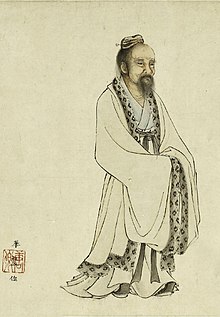
 Zhuangzi es una recopilación de textos atribuidos al pensador del mismo nombre que vivió entre el s. IV y III a. n. e.

Lee el siguiente texto y trata de explicar la paradoja que presenta.

      Zuangzi y Huizi estaban paseando por el dique en el río Hao. Zuangzi exclamó: "¿Mirad cómo brincan y disfrutan esos peces plateados! ¡He aquí el verdadero deleite de los peces!"

     Huizi: "Pero no sois un pez, ¿cómo sabéis cuál es el deleite de los peces?"

     Zuangzi: "No sois yo, ¿cómo sabéis que no sé cuál es el deleite de los peces?"

     Huizi: "No soy vos y, ciertamente, no sé lo que lleváis dentro. Pero está claro que no sois un pez, por tanto no sabéis cuál es el deleite de los peces".

     Zuangzi: "Volvamos al punto de partida, si no tenéis inconveniente. Me habéis preguntado cómo sé cuál es el placer de los peces. Por tanto, si me habéis preguntado esta pregunta, es que sabíais  que yo lo sabía. Pues bien, lo sé estando aquí, a la orilla del río".

                                              (Zuangzi 17)


      Para hablar sobre el conocimiento humano tendríamos que tener en cuenta las aportaciones de numerosas ciencias: psicología, neurología, biología....Más aún, es mucho más lo que ignoramos al respecto que lo que sabemos. Ciñéndonos al un punto de vista filosófico, hay que decir que la rama que lo estudia es la epistemología o teoría del conocimiento.
   Aunque siempre ha preocupado saber de dónde proceden nuestras ideas y cómo estar seguros de que estas reflejen la realidad tal cual es, este campo adquiere especial protagonismo entre los siglos XVII y XVIII. Entre otras razones, hay que tener en cuenta que durante estos siglos estamos en plena revolución científica y que las ciencias están cosechando notables éxitos mientras que la filosofía parece, como decía Kant, eternamente  estancada en  un campo de batalla donde tan pronto se alza victoriosa una corriente, llega otra y se le enfrenta. Era, por tanto, necesario analizar el conocimiento humano y ver sus límites y es aquí donde la epistomología cobra un papel fundamental.
    Muchas de las propuestas que entonces se hicieron parecen quedar anticuadas, otras han servido de guía para futuras investigaciones. Pero antes de entrar en el terreno filosófico de si es o no posible un conocimiento cierto de las cosas y cuál, si lo hay, es el límite del conocimiento, podemos comenzar por caracterizar el conocimiento humnao.
    Uno de sus princiàles rasgos es que nuestro pensamiento es, sobre todo, simbólico y, en concreto, lingüístico. Gracias al lenguaje podemos escapar de lo inmediato y pensar en cosas que no están en ese momento al alcance de nuestros sentidos. Por ejemplo, podemos estar en clase ocupados en pensar cómo pasaremos unas vacaciones en la playa. Incluso podemos ocuparnos de asuntos verdaderamente importantes que no sólamente hoy, nunca, podrán ser percibidos por los sentidos: el significado de la justicia, de la solidaridad.
   Sólo porque hay lenguaje podemos entender estas y muchas más cosas y, no sólo eso: el hombre puede transmitir y almacenar lo que aprende evitándose tener que estar inventando siempre lo mismo.
Por ello, empobrecer el lenguaje es, en definitiva, empobrecer nuestro pensamiento, nuestra capacidad de comunicación, de transmitir intereses y de avanzar como queda reflejado en este ejercicio de clase.
   Los alumnos de Primero de Bachillerato de Ciencias (2013/4) del IES La Rosaleda, van a intentar transmitir a sus compañeros una serie de ideas.
   En primer lugar tenemos a Laura Quintero Ocaña a ver qué ocurre:


   y...¡Sí! Tenía que decir que estaba embarazada (¡Tranquilos! No lo está)

   Lourdes Vegas Fernández también transmitió un mensaje. Éste mucho más fácil
¡¡Tengo hambre!!

 Parece que la cosa va bien. Sigamos probando con David Stachovskij del mismo curo.


   En fin. ¡Tiene sueño! Normal. Después de todo, esto es una clase de filosofía.

   Como todo esto está resultando demasiado fácil, vamos a ver si Inma Alba Chicón sabe transmitir  algo más complejo:

   Bueno, hemos tenido algunos problemillas para saber si le gusta o ama el fútbol. Si es ella o algún otro; pero, en líneas generales, el mensaje ha sido transmitido.
   Pasrece que no hay límites a nuestra capacidad de comunicación, así que ya sólo nos queda un par de intentos. El primero con Borja García Higueruelo, delegado del curso:

   NO HA HABIDO MANERA. ¡Tampoco era tan difícil! Sólo había que decir: Es importante cuidar bien de los hijos
   Finalmente lo intenta Gabriel Fira Radu con no mucha mejor suerte.

 El mensaje era el siguiente: El estado moderno debe constreuirse sobre bases solidarias.
   Cualquiera podría decir que íbamos a mala idea. Nada más lejos de mi intención. Sin embargo, en el ejercicio se evidencia que a medida que los mensajes se hacen más complejos, el éxito de la comunicación disminuye. Mis alumnos no conocen la lengua de signos que, en definitiva, es otro lenguaje, de manera que se ven obligados a improvisar con gestos. Éstos no tienen en su mayoría una dimensión simbólica, no son capaces de sustituir ideas. Por eso, mientras el gesto se parece a lo designado, la comunicación marchaba. Vale, no podíamos hacer precisiones muy sutiles; pero, en líneas generales, nos hacíamos entender. Sin embargo; cuando ya no hay esa semejanza física la comunicación fracasa.. ¿Qué ocurriría entonces si careciésemos de lenguaje o simplemente lo redujésemos drásticamente? ¿Cuántas cosas nos dejaríamos de decir? ¿qué saber podríamos compartir o almacenar? o, más aún, ¿Cuántas cosas dejaríamos de pensar? ¿Sería nuestra vida distinta a como la conocemos? ¿Habría sobrevivido nuestra especie?
   Es cierto que el lenguaje mismo presenta también deficiencias. A veces no significa lo que queremos y da lugar a malentendidos. No obstante, también entonces su importancia se nos revela de manera clara. Nos desespera que no signifique lo que queremos transmitir y nos frustran sus límites.
Pero la lengua refleja también nuestra alma. No sólo ocurre que con un lenguaje pobre se reduzca nuestra capacidad de análisis, la facultad de captar las diferencias, lo sutil. Ortega ve en la lengua un reflejo de nuestro ser, de manera que un yo profundo, una época de hombres intelectualmente activos y responsables, tendrá una lengua más rica; mientras que una época de estupidez y  de masas se refleja en una lengua más pobre.
   Veamos cómo lo analiza Ortega y Gasset en el Prólogo para franceses de su obra La rebelión de las masas:
   "La lengua revela la condición más arcana de la sociedad que la habla. En la porción no helenizada del pueblo romano, la lengua vigente es la que se ha llamado "latín vulgar", matriz de nuestros romances. No se conoce bien este latín vulgar y, en buena parte, sólo se llega a él por reconstrucciones. Pero lo que se conoce basta y sobra para que nos produzca espanto dos de sus caracteres. Uno es la increíble simplificación de su mecanismo gramatical en comparación con el latín clásico. La sabrosa complejidad indo-europea, que conservaba el lenguaje de las clases superiores, quedó suplantada por un habla plebeya, de mecanismo muy fácil, pero a la vez, o por lo mismo, pesadamente mecánico, como material; graqmática balbuciente y perifrástica, de ensayo y rodeo como la infantil.Es, en efecto, una lengua pueril o gaga que mo permite la fina arista del razonamiento ni líricos tornasoles. Es una lengua sin luz ni temperatura, sin evidencia y sin calor de alma, una lengua triste que avanza a tientas. Los vocablos parecen viejas monedas de cobre, mugrientas y sin rotundidad, como hartas de rodar por las tabernas mediterráneas. ¡qué vidas evacuadas de sí mismas, desoladas, condenadas a eterna cotidianidad se adivinan tras este seco artefacto lingüístico!"

        Eva Meijer, es una joven filósofa nacida en 1980 en los Países Bajos. Sus investigaciones se centran principalmente en justicia social y en el lenguaje. El libro Los animales habladores, examina el lenguaje animal, lo que sabemos acerca de él y lo que debemos saber para establecer relaciones más justas con ellos y con nosotras mismas.


Ejercicio:

Lee el siguiente texto y responde a las cuestiones planteadas.

    "Para entender lo que es el lenguaje, hemos de estudiar su funcionamiento, lo que podemos hacer analizando  las prácticas en las que se usa.  Wittgenstein establece una comparación con la palabra "juego". Existen muchos juegos diferentes, que no comparten ninguna característica común que nos permita definirlos. Algunos juegos poseen ciertos rasgos comunes, mientras que los de otros son distintos. No obstante, cuando jugamos sabemos que se trata de un juego. El concepto de "lenguaje" consiste asimismo en las numerosas formas en las que se emplea el lenguaje, pero no todas ellas poseen una característica común que podamos usar para definirlo. Por consiguiente, cuando Wittgenstein habla de los "juegos del lenguaje", no quiere decir que el lenguaje sea como un juego ni que las personas siempre estén jugando cuando lo emplean, sino que la estructura del concepto "lenguaje" es comparable con la del concepto "juego"".
                                    (Eva Meijer, Animales habladores)
1. Señala cinco usos o situaciones en las que el lenguaje sea fundamental. 
2. ¿Por que, según Wittgenstein no podemos dar una definición de lenguaje? Trata de ilustras tu respuesta con un ejemplo.


Epistemology, or the Theory of Knowledge

Philosophers have always wanted to know how we can obtain knowledge, and how we can be sure that the things that we think reflect reality. Which is more important – what we think, or what we experience? Or maybe the senses are our enemies, and they lie to us? Which characteristics must knowledge have in order to be certain?

However, it was only between the 16th and 18th century that epistemology became one of the most important areas of philosophy. What happened then?

During this period, science developed so much that we talk about the first scientific revolution. We can mention people like Galileo, Kepler, Newton, or Harvey, and so on. We saw a great change in this time because after the triumph of Christianity in Europe, the use of senses and attention to this world was totally abandoned in favour of the Bible’s explanation. The Bible contained the “truth”, and every rational explanation had to agree with the Bible. New scientists had no motivation to do new experiments when they could find all of the answers in the Bible, so they normally only did small variations on classic experiments that did not contradict the holy book.

From the 16th century on, a new mentality and a new generation of scientists appeared, who wanted to experiment and to measure the world around them, and of course that caused very good results. For example, Galileo is the inventor of the telescope, and with this new instrument he could get more evidence for his heliocentric theory. We can also talk about Harvey. He discovered the pulmonary circulation of blood by performing vivisections on animals. In a period when looking at the human body was almost forbidden, he wanted to look and to see for himself how blood is made and what happens with our blood inside of our bodies. The explanation that medicine gave in this period came from Galeno in the 1st century. He said that blood was made by our kidneys and that we are always making new blood. The problem that had no solution at that time was what happened to the old blood and why we didn’t explode. So Harvey had an idea: maybe we always have the same blood moving around our body, and the lungs are the motor that keeps the blood marching.

But how could he prove this? Well, he took living animals and cut them open while they were still alive. Yes, this sounds very traumatic, but this was the only way to see what was happening inside of us – we had no scanners, no radiography, nothing like that. Harvey represents the new way of making science quite well, in which it‘s necessary to see the facts, to measure lengths, to weigh weights, and so on. Now we are used to this way of working, but it was totally revolutionary at the time, and of course it caused a lot of success.

But what was happening with philosophy? No success at all. Philosophers continued arguing without any definite conclusion. So it was very easy to ask the following question: are we maybe working badly, are we not using our reason like we should, or are we maybe asking questions that we are not able to answer? Perhaps if we had a method like science, we could also get good results. That’s the problem – we need a method. And that was the main work of Descartes. From that moment, epistemology became one of the most important areas of philosophy for the next two centuries. Before I can say I know this or that or I can describe the world or so on, I have to discover the limits of human reason, and the best way to employ it.


When we talk about epistemology, or the theory of knowledge, we are talking about what we need to get true knowledge. But what are we talking about? In philosophy, we make a distinction between knowledge, opinion, belief, and evidence.
Normally, we use the word ‘knowledge’to refer to something that we believe and that we can demonstrate to be true. It’s a kind of correspondence between our idea and reality. For example, I think my mother is blonde, but we can also see the colour of her hair, and if it is so then we can say that it is true.
On the other hand, we use ‘belief’ to refer to an idea that we really think is true but we cannot demonstrate. For example, I believe in God. I am totally sure that God exists, but I can’t prove it.
And an ‘opinion’ is an idea that I’m not sure of and I can’t demonstrate to be true. For example, in my opinion, I think it’s going to rain tomorrow – that’s an idea I have. I’m not a scientist and I haven’t studied meteorology but I’ve seen the clouds and that’s what I think. Or another example, I think it’s going to be a lovely summer – I have reasons to think that, but I cannot prove anything or know the future. It’s just what I think.
Finally, we have ‘evidence’ that describes a feeling of total security about an idea, something that cannot be doubted. For example, if we say something like “I’m a philosophy teacher” or “you are sitting in this classroom”. However, it describes a subjectivefeeling and it could be that this feeling doesn’t correspond with reality and we are wrong. Normally, we don’t doubt the things that are presented as evident, but how could I be sure that I’m not dreaming? Especially when sometimes we have dreams so realistic that we believe they’re true. Yes, of course, there are many reasons to believe that we’re not dreaming, but the question is: can I prove it?
And another similar question, how can I be sure that my mind works correctly? If I were schizophrenic or paranoid, I would hear or see things as clearly as I am hearing and seeing you right now, but they would not be true or real. Of course, we could answer that if everybody sees the same thing or thinks the same thought, then that’s proof that what I’m seeing or thinking is true. But the fact is that it isn’t necessarily so. In the Middle Ages, everybody believed that the world was flat, but it wasn’t. So even if everybody thinks the same, everybody can be wrong. How can we be sure that we are not all paranoid or schizophrenic? We realise we are doing something strange because most people don’t do the same, but if we were all paranoid, we would all have the same behaviours and thoughts, and we wouldn’t be able to realise how crazy we were.
So, although normally we assume that anything that is evident is also true, we must remember that when we talk about evidence we are really only saying that we are very sure of it, and we can still make mistakes. For example, do you remember some mistakes you have made in exams? You were sure of the answer, you could swear you were right, but ultimately, you weren’t.

 
                                                GO TO THE CINEMA!!!!!
It will be interesting to watch A beautiful Mind
Here it is a  synopsis of the film
John Nash arrives at Princeton University as a new graduate student. He is a recipient of the prestigious Carnegie Prize for mathematics. Though he was promised a single room, his roommate Charles, a literature student, greets him as he moves in and soon becomes his best friend. Nash also meets a group of other promising math and science graduate students, Martin Hansen, Sol, Ainsley, and Bender, with whom he strikes up an awkward friendship. Nash admits to Charles that he is better with numbers than people, which comes as no surprise to them after watching his largely unsuccessful attempts at conversation with the women at the local bar.

Nash is seeking a truly original idea for his thesis paper, and he is under increasing pressure to develop his thesis so he can begin work. A particularly harsh rejection from a woman at the bar is what ultimately inspires his fruitful work in the concept of governing dynamics, a theory in mathematical economics.

After the conclusion of Nashs studies as a student at Princeton, he accepts a prestigious appointment at the Massachusetts Institute of Technology (MIT), along with his friends Sol and Bender. Russell Crowe as John Nash. Russell Crowe as John Nash.

Five years later while teaching a class on Calculus at MIT, he places a particularly interesting problem on the chalkboard that he dares his students to solve. When his student Alicia Larde comes to his office to discuss the problem, the two fall in love and eventually marry.

On a return visit to Princeton, Nash runs into his former roommate Charles and meets Charles young niece Marcee, whom he adores. He also encounters a mysterious Department of Defense agent, William Parcher. Nash is invited to a secret United States Department of Defense facility in the Pentagon to crack a complex encryption of an enemy telecommunication. Nash is able to decipher the code mentally to the astonishment of other codebreakers.

Parcher observes Nashs performance from above, while partially concealed behind a screen. Parcher gives Nash a new assignment to look for patterns in magazines and newspapers, ostensibly to thwart a Soviet plot. He must write a report of his findings and place them in a specified mailbox. After being chased by the Russians and an exchange of gunfire, Nash becomes increasingly paranoid and begins to behave erratically.

After observing this erratic behavior, Alicia informs a psychiatric hospital. Later, while delivering a guest lecture at Harvard University, Nash realizes that he is being watched by a hostile group of people. Although he attempts to flee, he is forcibly sedated and sent to a psychiatric facility. Nash's internment seemingly confirms his belief that the Soviets were trying to extract information from him. He views the officials of the psychiatric facility as Soviet kidnappers.

Alicia, desperate to help her husband, visits the mailbox and retrieves the never-opened "top secret" documents that Nash had delivered there. When confronted with this evidence, Nash is finally convinced that he has been hallucinating. The Department of Defense agent William Parcher and Nash's secret assignment to decode Soviet messages was in fact all a delusion. Even more surprisingly, Nash's friend Charles and his niece Marcee are also only products of Nash's mind.

After a painful series of insulin shock therapy sessions, Nash is released on the condition that he agrees to take antipsychotic medication. However, the drugs create negative side-effects that affect his relationship with his wife and, most dramatically, his intellectual capacity. Frustrated, Nash secretly stops taking his medication and hoards his pills, triggering a relapse of his psychosis.

While bathing his infant son, Nash becomes distracted and wanders off. Alicia is hanging laundry in the backyard and observes that the back gate is open. She discovers that Nash has turned an abandoned shed in a nearby grove of trees into an office for his work for Parcher. Upon realizing what has happened, Alicia runs into the house to confront Nash and barely saves their child from drowning in the bathtub. When she confronts him, Nash claims that his friend Charles was watching their son. Alicia runs to the phone to call the psychiatric hospital for emergency assistance. Parcher urges Nash to kill his wife, but Nash angrily refuses to do such a thing. After arguing with Parcher, Nash accidentally knocks Alicia to the ground. Afterwards, Alicia flees the house in fear with their child, but Nash steps in front of her car to prevent her from leaving. After a moment, Nash realizes that Marcee is a figment of his hallucinations because she has remained the same age since the day he met her. He tells Alicia, "She never gets old." Only then does he accept that all three people are, in fact, part of his hallucinations. (It is important to note that in real life, Nash suffered from auditory hallucinations and possible delusions, instead of visual hallucinations).

Caught between the intellectual paralysis of the antipsychotic drugs and his delusions, Nash and Alicia decide to try to live with his abnormal condition. Nash consciously says goodbye to the three of them forever in his attempts to ignore his hallucinations and not feed his demons. However, he thanks Charles for being his best friend over the years, and says a tearful goodbye to Marcee, stroking her hair and calling her "baby girl", telling them both he wouldn't speak to them anymore.

Nash grows older and approaches his old friend and intellectual rival Martin Hansen, now head of the Princeton mathematics department, who grants him permission to work out of the library and audit classes, though the university will not provide him with his own office. Though Nash still suffers from hallucinations and mentions taking newer medications, he is ultimately able to live with and largely ignore his psychotic episodes. He takes his situation in stride and humorously checks to ensure that any new acquaintances are in fact real people, not hallucinations.

Nash eventually earns the privilege of teaching again. He is honored by his fellow professors for his achievement in mathematics, and goes on to win the Nobel Memorial Prize in Economics for his revolutionary work on game theory. Nash and Alicia are about to leave the auditorium in Stockholm, when John sees Charles, Marcee and Parcher standing and smiling. Alicia asks John, "What's wrong?" John replies, "Nothing." With that, they both leave the auditorium.


  Now it’s your turn. 
1. Write an example of an opinion, an example of a belief, an example of knowledge, and an example of evidence.
2. Answer this quiz about the flim:

QUIZ: A Beautiful Mind 
Circle the correct answer.
1. Game theory is a distinct and interdisciplinary approach to the study of human behavior.
The disciplines most involved in game theory are mathematics, economics and the other
social and behavioral sciences. Game theory, like computational theory, was founded by
the great mathematician John von Neumann. Since the work of John von Neumann,
"games" have been a scientific metaphor for a much wider range of human interactions in
which the outcomes depend on the interactive strategies of two or more persons, who
have opposed or at best mixed motives. The work of John Nash was about:
• Games in which one player tries to beat the computer.
• Games in which two people fight each other.
• Games in which three or more people fight for global resources, with possible
cooperation between players. 
2.  John Nash, while in Princeton, is lured to play a math game by some of his friends-to-be.
He loses, much to his amazement, as he says: "I had the first move... my play was
perfect." According to Game Theory, in a complete knowledge game, he should've won,
or at least achieved a draw. He then concludes: "The game is flawed!" What is the name
of that math game?
• Chess
• Go
• Sudoku
• Tower of Hanoi 
3. John Nash has won the Nobel prize in:
. Economics
• Game Theory
• Math
• Physics
• Survival Math Skills 
4. John Nash says to his friends: “If we all go for the blonde and block each other, not a
single one of us is going to get her. So then we go for her friends, but they will all give us
the cold shoulder because no one likes to be second choice. But what if none of us goes
for the blonde? We won't get in each other's way and we won't insult the other girls. It's
the only way to win.” This example from the movie shows that
• Blondes are hard to get.
• When players cooperate and share resources they can achieve better results than
when they compete for the same thing.
• The color of people’s hair is very important.
• When it comes to blondes, your friends are your enemies

5. Why did John Nash develop schizophrenia?
• He solved too many math problems.
• He was genetically predisposed; one of his sons had it too.
• He didn’t suffer from schizophrenia; those people and those voices were real. 
6. John Nash says to Alicia: “I've made the most important discovery of my life. It's only in
the mysterious equation of love that any logical reasons can be found. I'm only here
tonight because of you. You are the only reason I am... you are all my reasons.” Why is
John Nash mixing love and math?
• He has schizophrenia.
• A mathematician will use the vocabulary of math even for non-mathematical
activities. It is a metaphor.
• He solved the equation and Alicia was the solution. 
7.   Why did the Army offer John Nash a job?
• He wanted to kill Communists.
• They didn’t know he would develop schizophrenia.
• He was very good at math, especially at breaking codes.
• He had connections. 


YOUR OPINION IS IMPORTANT 
Nacho del Arco Bonet, student of 1BS1 (2015/6) made this reflection about knowlege

I think that in order to know what is actually true, we must start with the lile things that we
are sure of and then keep connecng the dots unl we make a big conclusion. But how can we
be so sure of something? We’ve learnt that the senses can lie to us but without them, we
cannot perceive the world outside. So, I guess that we must believe in our senses and then
make sure that everyone sees the same way we do, because even though we all have di"erent
opinions we perceive reality, more or less, the same way. Or at least, I like to think so. To
support this reasoning, I would like to share a theory I’ve always had in mind. If we look at the
sea, we can all agree that it’s blue, with di"erent tonalies but blue. But what if the way I see
the sea is di"erent from yours? When we were young, we were taught the colours but we can
never know if we see them the same way. So, we made an agreement to name the colours one
way so we all could understand eachother and I think it’s the same with knowledge. We’ve
agreed to name things one way and called them knowledge to make things easier. If it wasn’t
that way, we would live in a world of disagreement which would be such a chaos. On the other
hand, the things most of the people think are right aren’t always applicable for everyone. For
example, we think killing people is wrong and it’s punished by the law, but killing animals in
order to eat isn’t. What is so di"erent? Even though we consider ourselves superior to them
because we’ve developed a language, we are not in the right to take their life away. They don’t belong to us

However, Elisa Sánchez, from the 1BC (2015/6), has a different opinion
How can we know when we think we are doing it right and it’s real?

In my opinion, we can’t answer this question with a method, or even answer it, because we can´t really know what we think is real. It all depends on the perspective; maybe I´m convinced that something is real, but someone can think completely different. So we can´t really prove it because, now, how do we know what person it’s right? The most common answer is: is thinking right the person who thinks like the others. But, how can we be so sure about that? Maybe everybody is wrong, like in the past when everybody thought the Earth was round. Maybe the person who thinks different is right.

To know if something is real we need to prove it,  if we prove it for a dog (an animal who perceive things completely different) what is real is completely different, so maybe what the human perceive is wrong. Maybe that´s the explication why sometimes the people with mental disorders aren’t aware that they’re ill, because their reality is distorted and the perceive the world in a different way, so they think different and are convinced what they see is real or right.